Zoning Debate Sparks Controversy Over Height Limits
September 24, 2024 | Ann Arbor City, Washtenaw County, Michigan
This article was created by AI summarizing key points discussed. AI makes mistakes, so for full details and context, please refer to the video of the full meeting. Please report any errors so we can fix them. Report an error »
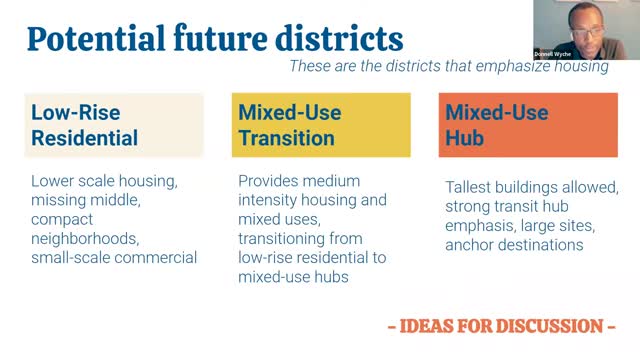
In a recent government meeting, officials discussed proposed changes to height limits for low-rise residential buildings in R districts, raising questions about the implications for housing density and urban development. Currently capped at 30 feet, the proposal suggests a modest increase to 35 feet, with some commissioners advocating for a more significant rise to 48 feet.
Commissioner Weich expressed concerns that maintaining the existing height limit could hinder efforts to achieve the city’s goal of creating 40,000 new housing units, particularly in R1 districts, which comprise 20% of the city’s land. He highlighted the potential for increased density through the construction of row houses, similar to those found in urban areas like Capitol Hill in Washington, D.C.
The discussion also touched on the need for flexibility in zoning regulations, particularly regarding the configuration of lots. Current zoning laws restrict the development of multiple dwellings on larger lots unless they face the street, which some officials argue is overly restrictive and car-centric.
Commissioner Leonard noted that while the proposed height increase is modest, it could still facilitate a gradual realization of housing density. He emphasized the importance of balancing community character with the need for more housing, suggesting that even small changes in height could lead to significant impacts on development.
The conversation also included considerations of building codes and the potential for mixed-use developments. Some commissioners argued that a height limit of 48 feet could align better with economic viability and community health, allowing for more light and public space activation.
Overall, the meeting underscored the complexities of urban planning, as officials weighed the need for increased housing against the preservation of neighborhood character. The proposed changes will continue to be evaluated as part of the city’s broader housing strategy.
Commissioner Weich expressed concerns that maintaining the existing height limit could hinder efforts to achieve the city’s goal of creating 40,000 new housing units, particularly in R1 districts, which comprise 20% of the city’s land. He highlighted the potential for increased density through the construction of row houses, similar to those found in urban areas like Capitol Hill in Washington, D.C.
The discussion also touched on the need for flexibility in zoning regulations, particularly regarding the configuration of lots. Current zoning laws restrict the development of multiple dwellings on larger lots unless they face the street, which some officials argue is overly restrictive and car-centric.
Commissioner Leonard noted that while the proposed height increase is modest, it could still facilitate a gradual realization of housing density. He emphasized the importance of balancing community character with the need for more housing, suggesting that even small changes in height could lead to significant impacts on development.
The conversation also included considerations of building codes and the potential for mixed-use developments. Some commissioners argued that a height limit of 48 feet could align better with economic viability and community health, allowing for more light and public space activation.
Overall, the meeting underscored the complexities of urban planning, as officials weighed the need for increased housing against the preservation of neighborhood character. The proposed changes will continue to be evaluated as part of the city’s broader housing strategy.
View the Full Meeting & All Its Details
This article offers just a summary. Unlock complete video, transcripts, and insights as a Founder Member.
✓
Watch full, unedited meeting videos
✓
Search every word spoken in unlimited transcripts
✓
AI summaries & real-time alerts (all government levels)
✓
Permanent access to expanding government content
30-day money-back guarantee
