Biden policies spark electricity cost crisis for Americans
September 19, 2024 | Budget: House Committee, Standing Committees - House & Senate, Congressional Hearings Compilation, Legislative, Federal
This article was created by AI summarizing key points discussed. AI makes mistakes, so for full details and context, please refer to the video of the full meeting. Please report any errors so we can fix them. Report an error »
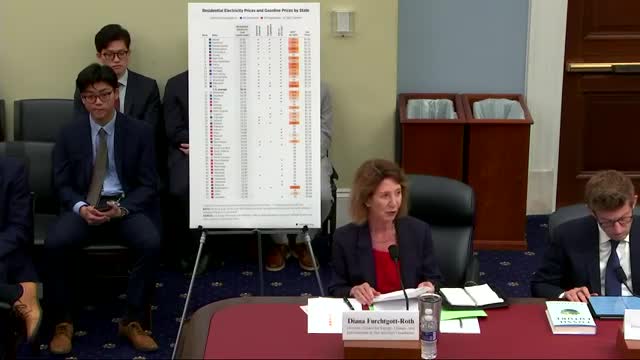
During a recent government meeting, significant concerns were raised regarding the rising costs of electricity and the implications of current energy policies on small businesses and farmers. A detailed analysis presented highlighted a stark contrast in electricity costs across states, revealing that the ten most expensive states for residential electricity are predominantly under Democratic control, with the exception of Alaska. These states have mandated renewable energy standards, which appear to correlate with higher electricity rates.
In contrast, the ten least expensive states, primarily Republican-led, do not enforce such renewable mandates and benefit from lower rates, with many states achieving costs of $0.15 per kilowatt-hour or lower. Notably, Washington state, which has a significant hydropower resource, is the only exception among the least expensive states that is not Republican-controlled.
The discussion also touched on the implications of the Inflation Reduction Act, which allocates approximately $1 trillion in credits and tax incentives aimed at promoting renewable energy, electric vehicles, and battery production. Critics argue that these incentives may inadvertently lead to increased electricity costs, further burdening consumers and businesses.
Additionally, the Biden-Harris administration's regulatory framework was scrutinized, particularly rules that would penalize car manufacturers for not achieving a 70% electric vehicle sales threshold by 2032, and the Environmental Protection Agency's (EPA) mandate for power plants to sequester 95% of their carbon emissions by the same year. Concerns were raised about the feasibility of these regulations, given the current technological limitations, suggesting that if these policies remain in place, they could create significant challenges for the energy sector and consumers alike by 2032.
In contrast, the ten least expensive states, primarily Republican-led, do not enforce such renewable mandates and benefit from lower rates, with many states achieving costs of $0.15 per kilowatt-hour or lower. Notably, Washington state, which has a significant hydropower resource, is the only exception among the least expensive states that is not Republican-controlled.
The discussion also touched on the implications of the Inflation Reduction Act, which allocates approximately $1 trillion in credits and tax incentives aimed at promoting renewable energy, electric vehicles, and battery production. Critics argue that these incentives may inadvertently lead to increased electricity costs, further burdening consumers and businesses.
Additionally, the Biden-Harris administration's regulatory framework was scrutinized, particularly rules that would penalize car manufacturers for not achieving a 70% electric vehicle sales threshold by 2032, and the Environmental Protection Agency's (EPA) mandate for power plants to sequester 95% of their carbon emissions by the same year. Concerns were raised about the feasibility of these regulations, given the current technological limitations, suggesting that if these policies remain in place, they could create significant challenges for the energy sector and consumers alike by 2032.
Don't Miss a Word: See the Full Meeting!
Go beyond summaries. Unlock every video, transcript, and key insight with a Founder Membership.
✓
Get instant access to full meeting videos
✓
Search and clip any phrase from complete transcripts
✓
Receive AI-powered summaries & custom alerts
✓
Enjoy lifetime, unrestricted access to government data
30-day money-back guarantee
