Lawmakers clash over emergency spending and national debt crisis
September 25, 2024 | Budget: House Committee, Standing Committees - House & Senate, Congressional Hearings Compilation, Legislative, Federal
This article was created by AI summarizing key points discussed. AI makes mistakes, so for full details and context, please refer to the video of the full meeting. Please report any errors so we can fix them. Report an error »
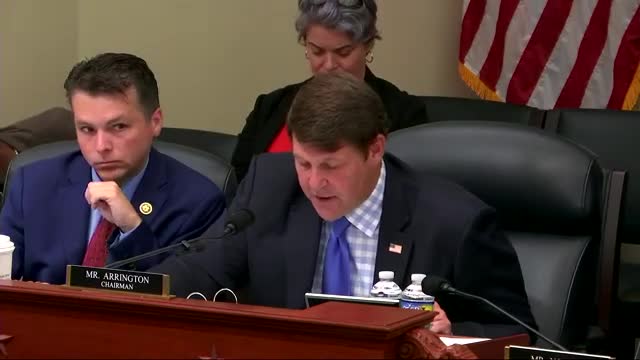
During a recent government meeting, lawmakers discussed a significant piece of legislation aimed at reforming how emergency spending is accounted for in the federal budget. The proposed bill, known as HR 8068, seeks to exclude emergency and supplemental appropriations from the Congressional Budget Office's (CBO) baseline projections. Proponents argue that this change is necessary to provide a more accurate representation of discretionary spending and to address the growing national debt, which currently stands at an unprecedented $35 trillion.
Representative Grothman, a key supporter of the bill, highlighted the alarming rise in interest costs, which have reached $870 billion in 2024—surpassing expenditures on both Medicare and military spending. He attributed the escalating debt to decades of excessive spending, particularly through emergency funding, which he claims has become a recurring expense rather than a one-time allocation. Last year, Congress designated $162 billion in emergency spending, which increased to $196 billion this year.
The legislation aims to rectify what supporters describe as a \"culture of rapid emergency spending\" that distorts budget projections. By removing emergency spending from the baseline, the bill intends to create a clearer fiscal picture and curb the trend of inflated spending assumptions by the CBO.
However, the proposal faced opposition from some lawmakers, including Representative Espiot, who argued that emergency spending is essential for responding to crises such as natural disasters and public health emergencies. He emphasized the necessity of maintaining funding for communities affected by events like the impending tropical storm Helene, asserting that excluding such expenditures from the budget would lead to a misleading portrayal of spending trends.
Despite the differing viewpoints, the discussion underscored a bipartisan recognition of the need to address the nation's fiscal challenges. Supporters of HR 8068 urged their colleagues to back the bill as a common-sense solution to the ongoing spending dilemma, while opponents cautioned against undermining the flexibility needed to respond to emergencies effectively. The meeting concluded with a call for further deliberation on the implications of the proposed changes to federal budgeting practices.
Representative Grothman, a key supporter of the bill, highlighted the alarming rise in interest costs, which have reached $870 billion in 2024—surpassing expenditures on both Medicare and military spending. He attributed the escalating debt to decades of excessive spending, particularly through emergency funding, which he claims has become a recurring expense rather than a one-time allocation. Last year, Congress designated $162 billion in emergency spending, which increased to $196 billion this year.
The legislation aims to rectify what supporters describe as a \"culture of rapid emergency spending\" that distorts budget projections. By removing emergency spending from the baseline, the bill intends to create a clearer fiscal picture and curb the trend of inflated spending assumptions by the CBO.
However, the proposal faced opposition from some lawmakers, including Representative Espiot, who argued that emergency spending is essential for responding to crises such as natural disasters and public health emergencies. He emphasized the necessity of maintaining funding for communities affected by events like the impending tropical storm Helene, asserting that excluding such expenditures from the budget would lead to a misleading portrayal of spending trends.
Despite the differing viewpoints, the discussion underscored a bipartisan recognition of the need to address the nation's fiscal challenges. Supporters of HR 8068 urged their colleagues to back the bill as a common-sense solution to the ongoing spending dilemma, while opponents cautioned against undermining the flexibility needed to respond to emergencies effectively. The meeting concluded with a call for further deliberation on the implications of the proposed changes to federal budgeting practices.
Don't Miss a Word: See the Full Meeting!
Go beyond summaries. Unlock every video, transcript, and key insight with a Founder Membership.
✓
Get instant access to full meeting videos
✓
Search and clip any phrase from complete transcripts
✓
Receive AI-powered summaries & custom alerts
✓
Enjoy lifetime, unrestricted access to government data
30-day money-back guarantee
