Iran's Global Threat Expands Amid Rising Regional Tensions
September 19, 2024 | Foreign Affairs: House Committee, Standing Committees - House & Senate, Congressional Hearings Compilation, Legislative, Federal
This article was created by AI summarizing key points discussed. AI makes mistakes, so for full details and context, please refer to the video of the full meeting. Please report any errors so we can fix them. Report an error »
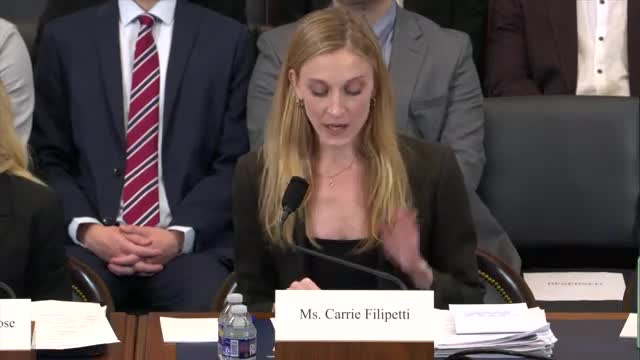
In a recent government meeting, experts highlighted the multifaceted threat posed by Iran to U.S. interests, particularly in the context of significant anniversaries related to Iranian aggression. The discussions were framed around the one-year anniversary of the October 7th terrorist attack in Israel, the two-year anniversary of the murder of Iranian activist Masa Amini, and the 30-year anniversary of a deadly terrorist attack on a Jewish community center in Argentina.
The testimony underscored Iran's expanding influence in Latin America and the Caribbean, where it is seen as exploiting regional instability and a border crisis to threaten American security. Experts noted that Iran has established a network of cultural centers and propaganda outlets to radicalize populations and fund terrorist activities. A notable example mentioned was Al Mustafa University, which has been sanctioned for recruiting for the Iranian Revolutionary Guard Corps.
Concerns were raised about Iran's potential for weapon transfers to authoritarian regimes, with reports of suspicious flights between Tehran and Caracas. The U.S. Department of Justice has indicated that Iran is determined to carry out attacks on American soil, viewing Latin America as a strategic foothold.
Congress has been proactive in addressing these threats, with the passage of several acts aimed at countering Iran's influence, including the Countering Iran in the Western Hemisphere Act of 2012 and more recent legislation like the MASA Act and the Fight Crime Act. Experts called for continued bipartisan support to enhance U.S. responses to Iranian aggression, emphasizing the need for a robust deterrent strategy.
Recommendations included responding decisively to attacks on American assets, encouraging European partners to activate UN resolutions against Iran, ensuring compliance with existing legislation, and supporting the Iranian people in their struggle against the regime.
The meeting concluded with a call for a unified American leadership approach to address the ongoing geopolitical tensions in the Middle East, advocating for a bipartisan strategy that encompasses both the Israel-Palestinian conflict and Iran's destabilizing activities.
The testimony underscored Iran's expanding influence in Latin America and the Caribbean, where it is seen as exploiting regional instability and a border crisis to threaten American security. Experts noted that Iran has established a network of cultural centers and propaganda outlets to radicalize populations and fund terrorist activities. A notable example mentioned was Al Mustafa University, which has been sanctioned for recruiting for the Iranian Revolutionary Guard Corps.
Concerns were raised about Iran's potential for weapon transfers to authoritarian regimes, with reports of suspicious flights between Tehran and Caracas. The U.S. Department of Justice has indicated that Iran is determined to carry out attacks on American soil, viewing Latin America as a strategic foothold.
Congress has been proactive in addressing these threats, with the passage of several acts aimed at countering Iran's influence, including the Countering Iran in the Western Hemisphere Act of 2012 and more recent legislation like the MASA Act and the Fight Crime Act. Experts called for continued bipartisan support to enhance U.S. responses to Iranian aggression, emphasizing the need for a robust deterrent strategy.
Recommendations included responding decisively to attacks on American assets, encouraging European partners to activate UN resolutions against Iran, ensuring compliance with existing legislation, and supporting the Iranian people in their struggle against the regime.
The meeting concluded with a call for a unified American leadership approach to address the ongoing geopolitical tensions in the Middle East, advocating for a bipartisan strategy that encompasses both the Israel-Palestinian conflict and Iran's destabilizing activities.
View the Full Meeting & All Its Details
This article offers just a summary. Unlock complete video, transcripts, and insights as a Founder Member.
✓
Watch full, unedited meeting videos
✓
Search every word spoken in unlimited transcripts
✓
AI summaries & real-time alerts (all government levels)
✓
Permanent access to expanding government content
30-day money-back guarantee
