Housing Crisis Looms as Vermont Sets New Development Targets
September 19, 2024 | Bennington County, Vermont
This article was created by AI summarizing key points discussed. AI makes mistakes, so for full details and context, please refer to the video of the full meeting. Please report any errors so we can fix them. Report an error »
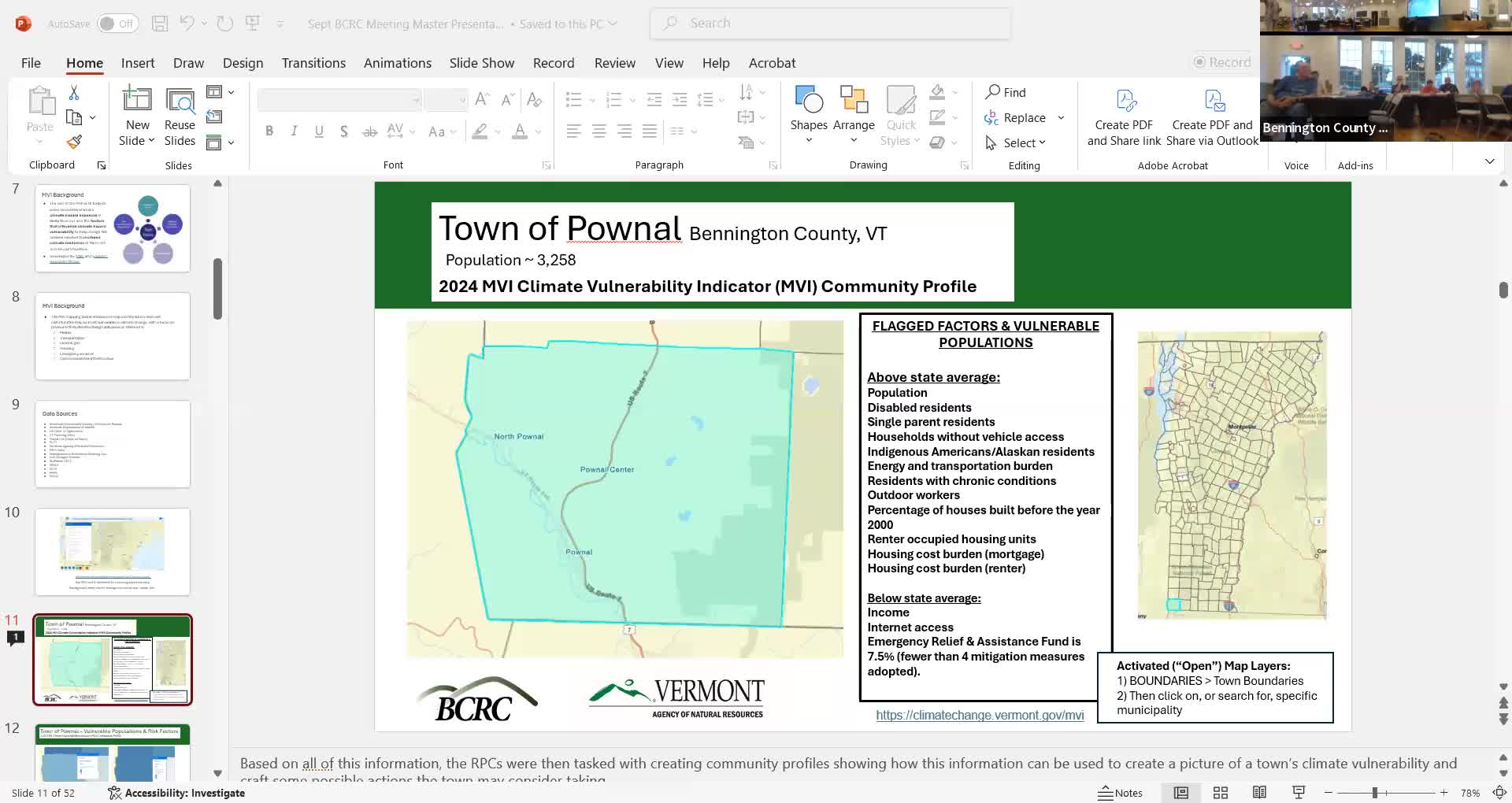
In a recent government meeting, officials discussed the pressing need for new housing units in the Bennington region, as outlined by the Vermont Department of Housing and Community Development. The department's recent assessment indicates that between 985 and 1,588 new housing units will be required by 2029. Adjusting for municipalities not included in the Bennington region, staff estimated a more localized need of approximately 852 to 1,413 units.
The meeting highlighted the importance of disaggregating these housing targets by municipality, with a focus on the capacity of different towns to accommodate new residential developments. Officials categorized municipalities into three tiers based on their infrastructure capabilities. Rural areas with limited infrastructure were identified as having minimal potential for new housing permits, while towns like Arlington, Pownall, and Shaftesbury, which possess some water and sewer capacity, could accommodate a moderate increase in housing. The highest capacity was noted in Bennington and Manchester, where existing infrastructure supports more significant development.
The HOME Act mandates that areas served by both municipal water and sewer must allow for at least five units per acre of new residential development. Current permit data revealed that Bennington has averaged nearly 21 permits annually over the past five years, while Manchester has issued around 13. The discussion also touched on the potential for converting existing single-family homes into multi-unit residences, particularly in areas like Old Bennington.
Officials emphasized the need to break down housing targets into specific unit types, sizes, and ownership models, including rental versus ownership options. A market analysis indicated that over half of households in Bennington are lower income, while Manchester's analysis suggested a demand for approximately 200 new units in its downtown area, with a recommended mix of market-rate and subsidized housing.
As the deadline for finalizing these housing plans approaches in November, officials expressed concern over the lack of state guidance on how to effectively disaggregate the housing targets, underscoring the urgency of addressing the region's housing needs.
The meeting highlighted the importance of disaggregating these housing targets by municipality, with a focus on the capacity of different towns to accommodate new residential developments. Officials categorized municipalities into three tiers based on their infrastructure capabilities. Rural areas with limited infrastructure were identified as having minimal potential for new housing permits, while towns like Arlington, Pownall, and Shaftesbury, which possess some water and sewer capacity, could accommodate a moderate increase in housing. The highest capacity was noted in Bennington and Manchester, where existing infrastructure supports more significant development.
The HOME Act mandates that areas served by both municipal water and sewer must allow for at least five units per acre of new residential development. Current permit data revealed that Bennington has averaged nearly 21 permits annually over the past five years, while Manchester has issued around 13. The discussion also touched on the potential for converting existing single-family homes into multi-unit residences, particularly in areas like Old Bennington.
Officials emphasized the need to break down housing targets into specific unit types, sizes, and ownership models, including rental versus ownership options. A market analysis indicated that over half of households in Bennington are lower income, while Manchester's analysis suggested a demand for approximately 200 new units in its downtown area, with a recommended mix of market-rate and subsidized housing.
As the deadline for finalizing these housing plans approaches in November, officials expressed concern over the lack of state guidance on how to effectively disaggregate the housing targets, underscoring the urgency of addressing the region's housing needs.
Don't Miss a Word: See the Full Meeting!
Go beyond summaries. Unlock every video, transcript, and key insight with a Founder Membership.
✓
Get instant access to full meeting videos
✓
Search and clip any phrase from complete transcripts
✓
Receive AI-powered summaries & custom alerts
✓
Enjoy lifetime, unrestricted access to government data
30-day money-back guarantee
