New regulations set to transform psilocybin cultivation industry
October 15, 2024 | Centennial, Arapahoe County, Colorado
This article was created by AI summarizing key points discussed. AI makes mistakes, so for full details and context, please refer to the video of the full meeting. Please report any errors so we can fix them. Report an error »
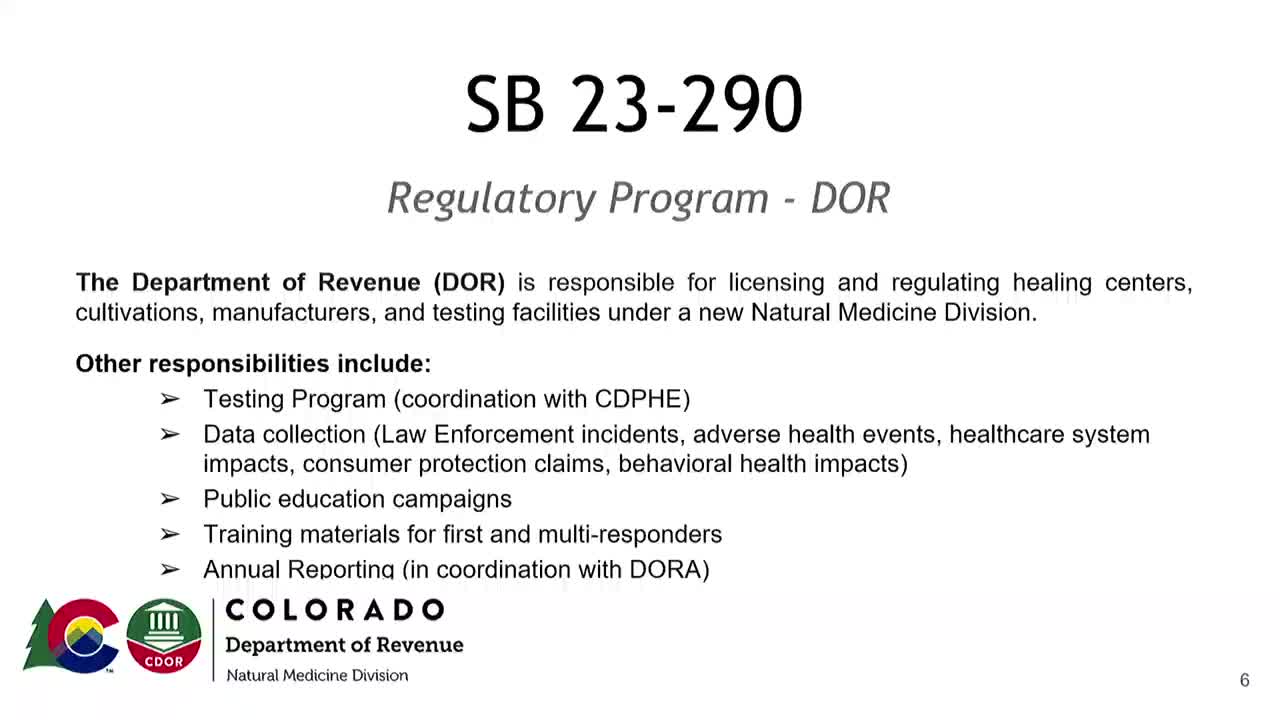
In a recent government meeting, officials provided an update on the regulatory framework for psilocybin and psilocin cultivation, marking a significant step in the establishment of a regulated program for these substances. The meeting highlighted the completion of rulemaking for four distinct license types, focusing primarily on cultivation facilities dedicated to psilocybin mushrooms, commonly known as magic mushrooms.
The program will initially concentrate on psilocybin and psilocin, explicitly excluding other natural medicines such as DMT, Ibogaine, and mescaline. This narrow focus aims to create a controlled environment for cultivation, which will differ significantly from the practices seen in the regulated marijuana and hemp industries. Cultivation will primarily occur in sealed containers to prevent contamination, with outdoor cultivation deemed impractical due to Colorado's climate.
Officials outlined the roles of various license types, including manufacturers who will produce products from the cultivated mushrooms and independent testing facilities that must be certified by the Department of Public Health and Environment. These testing facilities are required to operate independently from other license types to ensure unbiased results.
Additionally, the meeting addressed the establishment of healing centers, which can be co-located with other license types, excluding testing facilities. The Department of Revenue will oversee the licensing process, with applications set to open on December 31, 2023. Officials anticipate that licenses will be issued in early 2025, with operational facilities expected to launch by mid-2025.
The regulatory framework also includes provisions for public education, first responder training, and data collection related to health impacts and consumer protection. Notably, the new rules prohibit the use of pesticides and hazardous substances in cultivation and manufacturing processes, emphasizing safety and contamination prevention.
As the state prepares for this new regulatory landscape, officials remain committed to preventing over-commercialization and ensuring youth access is restricted. The meeting concluded with an invitation for further questions, signaling an ongoing dialogue as the program develops.
The program will initially concentrate on psilocybin and psilocin, explicitly excluding other natural medicines such as DMT, Ibogaine, and mescaline. This narrow focus aims to create a controlled environment for cultivation, which will differ significantly from the practices seen in the regulated marijuana and hemp industries. Cultivation will primarily occur in sealed containers to prevent contamination, with outdoor cultivation deemed impractical due to Colorado's climate.
Officials outlined the roles of various license types, including manufacturers who will produce products from the cultivated mushrooms and independent testing facilities that must be certified by the Department of Public Health and Environment. These testing facilities are required to operate independently from other license types to ensure unbiased results.
Additionally, the meeting addressed the establishment of healing centers, which can be co-located with other license types, excluding testing facilities. The Department of Revenue will oversee the licensing process, with applications set to open on December 31, 2023. Officials anticipate that licenses will be issued in early 2025, with operational facilities expected to launch by mid-2025.
The regulatory framework also includes provisions for public education, first responder training, and data collection related to health impacts and consumer protection. Notably, the new rules prohibit the use of pesticides and hazardous substances in cultivation and manufacturing processes, emphasizing safety and contamination prevention.
As the state prepares for this new regulatory landscape, officials remain committed to preventing over-commercialization and ensuring youth access is restricted. The meeting concluded with an invitation for further questions, signaling an ongoing dialogue as the program develops.
Don't Miss a Word: See the Full Meeting!
Go beyond summaries. Unlock every video, transcript, and key insight with a Founder Membership.
✓
Get instant access to full meeting videos
✓
Search and clip any phrase from complete transcripts
✓
Receive AI-powered summaries & custom alerts
✓
Enjoy lifetime, unrestricted access to government data
30-day money-back guarantee
