City of Boulder unveils ambitious 2025 budget plan
October 03, 2024 | Boulder, Boulder County, Colorado
This article was created by AI summarizing key points discussed. AI makes mistakes, so for full details and context, please refer to the video of the full meeting. Please report any errors so we can fix them. Report an error »
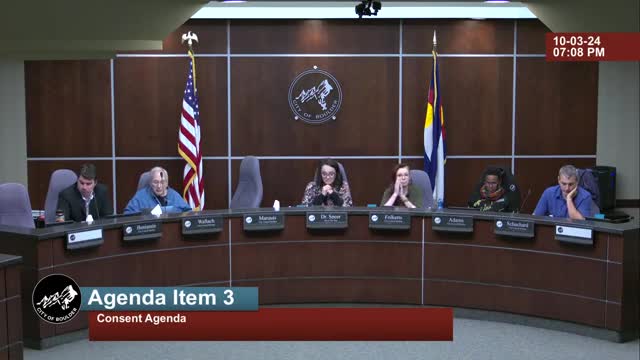
During a recent Boulder City Council meeting, officials discussed key components of the proposed 2025 budget, which includes several ordinances aimed at establishing financial frameworks for the upcoming fiscal year. The council reviewed four main items: the adoption of the city budget, the establishment of property tax mill levies, the appropriation of funds to cover city expenses, and amendments to tax regulations affecting residential and non-residential development.
City Manager Nuria Rivera Vandermeid emphasized the importance of ongoing community engagement in shaping the budget throughout the year, noting that council decisions directly influence budgetary outcomes. Budget Officer Charlotte Husky presented a high-level overview of the financial outlook, highlighting projected revenues of approximately $492.5 million for 2025, with sales and use taxes expected to contribute 37% of total revenue. However, the city anticipates slow growth in these revenue sources, with property taxes projected to account for 12% of the budget.
The operating budget for 2025 is set at $399.3 million, with a focus on reallocating existing funds towards prioritized outcomes. The capital budget is proposed at $190.2 million, earmarked for significant community projects, including the East Boulder Community Center and improvements to University Hill.
Council members raised concerns about the implications of a potential minimum wage increase on the budget and the need for adjustments based on fluctuating revenue. The city is also grappling with significant unfunded needs, estimated at $380 million, prompting discussions about long-term financial strategies and alternative funding mechanisms.
Public comments during the meeting highlighted community concerns regarding the budget's impact on local services, particularly in human services and housing assistance. Julie Van Domelen, Executive Director of EFA, reported an increase in demand for services amid funding cuts, urging the council to consider additional financial support for safety net programs.
As the council moves forward, the next steps include a second reading of the budget on October 17, where further discussions and potential amendments will take place. The meeting underscored the ongoing challenges faced by the city in balancing fiscal responsibility with community needs and priorities.
City Manager Nuria Rivera Vandermeid emphasized the importance of ongoing community engagement in shaping the budget throughout the year, noting that council decisions directly influence budgetary outcomes. Budget Officer Charlotte Husky presented a high-level overview of the financial outlook, highlighting projected revenues of approximately $492.5 million for 2025, with sales and use taxes expected to contribute 37% of total revenue. However, the city anticipates slow growth in these revenue sources, with property taxes projected to account for 12% of the budget.
The operating budget for 2025 is set at $399.3 million, with a focus on reallocating existing funds towards prioritized outcomes. The capital budget is proposed at $190.2 million, earmarked for significant community projects, including the East Boulder Community Center and improvements to University Hill.
Council members raised concerns about the implications of a potential minimum wage increase on the budget and the need for adjustments based on fluctuating revenue. The city is also grappling with significant unfunded needs, estimated at $380 million, prompting discussions about long-term financial strategies and alternative funding mechanisms.
Public comments during the meeting highlighted community concerns regarding the budget's impact on local services, particularly in human services and housing assistance. Julie Van Domelen, Executive Director of EFA, reported an increase in demand for services amid funding cuts, urging the council to consider additional financial support for safety net programs.
As the council moves forward, the next steps include a second reading of the budget on October 17, where further discussions and potential amendments will take place. The meeting underscored the ongoing challenges faced by the city in balancing fiscal responsibility with community needs and priorities.
View the Full Meeting & All Its Details
This article offers just a summary. Unlock complete video, transcripts, and insights as a Founder Member.
✓
Watch full, unedited meeting videos
✓
Search every word spoken in unlimited transcripts
✓
AI summaries & real-time alerts (all government levels)
✓
Permanent access to expanding government content
30-day money-back guarantee
