New wind power regulations spark public debate and concerns
October 17, 2024 | Spokane County, Washington
This article was created by AI summarizing key points discussed. AI makes mistakes, so for full details and context, please refer to the video of the full meeting. Please report any errors so we can fix them. Report an error »
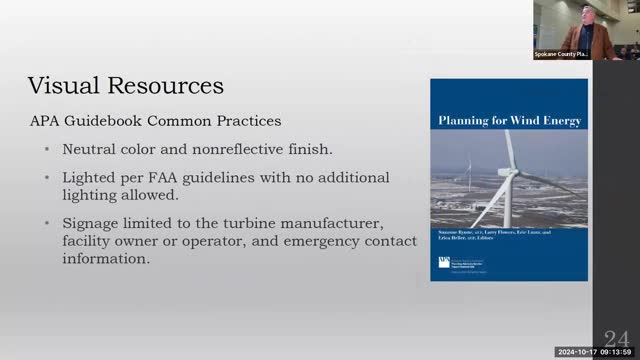
In a recent government meeting, officials discussed the development of wind energy facilities, focusing on various environmental and regulatory considerations. Key topics included visual aesthetics, noise mitigation, and the impact of wind turbines on local wildlife, particularly migratory birds and endangered species.
The meeting highlighted the importance of adhering to standards that prevent wind turbines from becoming visual nuisances or excessive noise sources for nearby residents. Concerns were raised about the \"flicker effect\" caused by turbine blades reflecting sunlight, which can affect properties located in the path of the sun. Officials emphasized the need for regulations that would minimize these impacts, including potential setbacks for turbine installations.
A wind map presented during the meeting indicated areas in the region, particularly around Walla Walla and Richland, that are well-suited for wind power generation due to favorable wind conditions. Spokane County was identified as having viable locations for future wind projects, although not in the prime areas.
Wildlife protection was another critical topic, with discussions on the need for permits and penalties to safeguard local species. The meeting underscored that federal laws protect not only birds but also bats from the impacts of energy generation.
Decommissioning plans for wind facilities were also addressed, with officials outlining the necessity for clear disposal strategies to prevent the county from incurring future liabilities. The meeting concluded with a discussion on the tax implications of wind energy projects, noting that under Washington law, these facilities are classified as personal property, leading to depreciation and potential revenue losses for local governments. Various tax strategies were proposed to address these challenges, including a nameplate tax and payments in lieu of taxes.
The meeting ended with an invitation for public testimony, signaling ongoing community engagement in the planning process for wind energy development.
The meeting highlighted the importance of adhering to standards that prevent wind turbines from becoming visual nuisances or excessive noise sources for nearby residents. Concerns were raised about the \"flicker effect\" caused by turbine blades reflecting sunlight, which can affect properties located in the path of the sun. Officials emphasized the need for regulations that would minimize these impacts, including potential setbacks for turbine installations.
A wind map presented during the meeting indicated areas in the region, particularly around Walla Walla and Richland, that are well-suited for wind power generation due to favorable wind conditions. Spokane County was identified as having viable locations for future wind projects, although not in the prime areas.
Wildlife protection was another critical topic, with discussions on the need for permits and penalties to safeguard local species. The meeting underscored that federal laws protect not only birds but also bats from the impacts of energy generation.
Decommissioning plans for wind facilities were also addressed, with officials outlining the necessity for clear disposal strategies to prevent the county from incurring future liabilities. The meeting concluded with a discussion on the tax implications of wind energy projects, noting that under Washington law, these facilities are classified as personal property, leading to depreciation and potential revenue losses for local governments. Various tax strategies were proposed to address these challenges, including a nameplate tax and payments in lieu of taxes.
The meeting ended with an invitation for public testimony, signaling ongoing community engagement in the planning process for wind energy development.
View the Full Meeting & All Its Details
This article offers just a summary. Unlock complete video, transcripts, and insights as a Founder Member.
✓
Watch full, unedited meeting videos
✓
Search every word spoken in unlimited transcripts
✓
AI summaries & real-time alerts (all government levels)
✓
Permanent access to expanding government content
30-day money-back guarantee
