School District Faces Overcrowding Crisis and Urgent Solutions
October 16, 2024 | West Clermont Local, School Districts, Ohio
This article was created by AI summarizing key points discussed. AI makes mistakes, so for full details and context, please refer to the video of the full meeting. Please report any errors so we can fix them. Report an error »
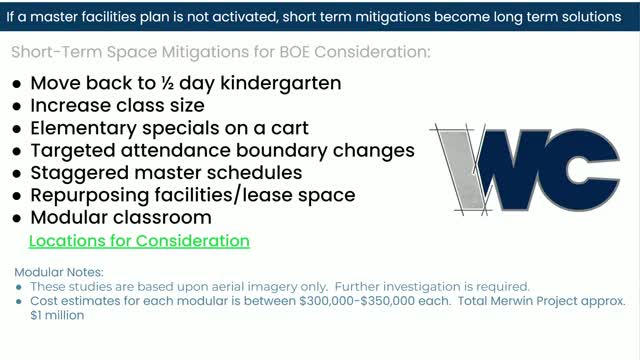
In a recent government meeting, school officials discussed pressing challenges related to the growing student population and the need for immediate and long-term solutions. The conversation highlighted the urgency of addressing overcrowding in classrooms and the potential implementation of short-term measures while a comprehensive facilities plan is developed.
The district is currently facing significant enrollment increases, prompting officials to explore various short-term strategies to alleviate space constraints. Among the proposed solutions are reverting kindergarten to half-day sessions, increasing class sizes, and utilizing modular classrooms. The latter has already been implemented at Merwin Elementary, where officials noted that the cost of the modular project was approximately $1 million, with plans to resell the units after use.
Officials emphasized that if a long-term facilities plan is not established soon, these short-term solutions could become permanent fixtures in the district. The timeline for deciding on additional modular classrooms is critical, with a decision needed by November to ensure availability for the next school year.
The meeting also addressed the need for redistricting as part of any future plans. Officials acknowledged that while redistricting can be emotionally charged, it may be necessary to balance student populations across schools. The analysis revealed that the current facilities plan does not adequately address overcrowding or the aging infrastructure of several buildings.
In addition to addressing immediate space needs, officials discussed the importance of modernizing facilities to create equitable learning environments. The proposed updates include adding classrooms and improving technology and safety measures across the district. The estimated cost for these enhancements, alongside the existing facilities plan, is projected to be around $181 million, with a local share of approximately $142 million.
As the district grapples with these challenges, officials are committed to ensuring that any solutions prioritize the educational needs of students while addressing the logistical realities of a growing population. The next steps will involve further analysis and community engagement to refine the proposed plans and secure necessary funding.
The district is currently facing significant enrollment increases, prompting officials to explore various short-term strategies to alleviate space constraints. Among the proposed solutions are reverting kindergarten to half-day sessions, increasing class sizes, and utilizing modular classrooms. The latter has already been implemented at Merwin Elementary, where officials noted that the cost of the modular project was approximately $1 million, with plans to resell the units after use.
Officials emphasized that if a long-term facilities plan is not established soon, these short-term solutions could become permanent fixtures in the district. The timeline for deciding on additional modular classrooms is critical, with a decision needed by November to ensure availability for the next school year.
The meeting also addressed the need for redistricting as part of any future plans. Officials acknowledged that while redistricting can be emotionally charged, it may be necessary to balance student populations across schools. The analysis revealed that the current facilities plan does not adequately address overcrowding or the aging infrastructure of several buildings.
In addition to addressing immediate space needs, officials discussed the importance of modernizing facilities to create equitable learning environments. The proposed updates include adding classrooms and improving technology and safety measures across the district. The estimated cost for these enhancements, alongside the existing facilities plan, is projected to be around $181 million, with a local share of approximately $142 million.
As the district grapples with these challenges, officials are committed to ensuring that any solutions prioritize the educational needs of students while addressing the logistical realities of a growing population. The next steps will involve further analysis and community engagement to refine the proposed plans and secure necessary funding.
View the Full Meeting & All Its Details
This article offers just a summary. Unlock complete video, transcripts, and insights as a Founder Member.
✓
Watch full, unedited meeting videos
✓
Search every word spoken in unlimited transcripts
✓
AI summaries & real-time alerts (all government levels)
✓
Permanent access to expanding government content
30-day money-back guarantee
