Pakistan's Prime Minister Appeals to Biden for Doctor's Release
This article was created by AI summarizing key points discussed. AI makes mistakes, so for full details and context, please refer to the video of the full meeting. Please report any errors so we can fix them. Report an error »
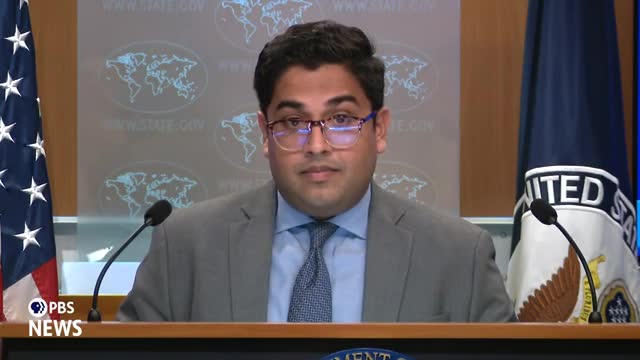
During a recent government meeting, significant discussions emerged regarding international relations and human rights issues, particularly involving Pakistan and India.
Pakistani Prime Minister Shehbaz Sharif has formally appealed to President Biden for the release of Dr. Aafia Siddiqui, who is currently incarcerated in the U.S. for attempting to kill American officials in Afghanistan. In response, officials emphasized that they would not comment on private diplomatic communications and referred inquiries about Siddiqui's case to the Department of Justice.
The meeting also addressed rising concerns over religious extremism in Pakistan, particularly following a violent incident where a doctor accused of blasphemy was killed by police, and his body was subsequently desecrated by a mob. U.S. representatives reiterated their opposition to blasphemy laws globally, stating that such laws threaten human rights and fundamental freedoms, including freedom of expression and religion. They confirmed that these concerns are regularly raised with Pakistan and other nations.
Additionally, media reports indicated that the U.S. has communicated with the Indian government regarding accountability for an alleged murder plot against a Sikh activist in New York. U.S. officials acknowledged valuable engagement with India's inquiry committee, noting that information was exchanged to aid ongoing investigations. They expressed a desire for meaningful accountability based on the results of these inquiries.
The meeting also touched on domestic issues in Pakistan, including the resignation of a senator who claimed he was detained and received dialysis while in custody. U.S. officials stated they were unaware of the situation and had no further comments.
Overall, the discussions highlighted ongoing diplomatic challenges and the U.S. commitment to addressing human rights issues in South Asia.
Pakistani Prime Minister Shehbaz Sharif has formally appealed to President Biden for the release of Dr. Aafia Siddiqui, who is currently incarcerated in the U.S. for attempting to kill American officials in Afghanistan. In response, officials emphasized that they would not comment on private diplomatic communications and referred inquiries about Siddiqui's case to the Department of Justice.
The meeting also addressed rising concerns over religious extremism in Pakistan, particularly following a violent incident where a doctor accused of blasphemy was killed by police, and his body was subsequently desecrated by a mob. U.S. representatives reiterated their opposition to blasphemy laws globally, stating that such laws threaten human rights and fundamental freedoms, including freedom of expression and religion. They confirmed that these concerns are regularly raised with Pakistan and other nations.
Additionally, media reports indicated that the U.S. has communicated with the Indian government regarding accountability for an alleged murder plot against a Sikh activist in New York. U.S. officials acknowledged valuable engagement with India's inquiry committee, noting that information was exchanged to aid ongoing investigations. They expressed a desire for meaningful accountability based on the results of these inquiries.
The meeting also touched on domestic issues in Pakistan, including the resignation of a senator who claimed he was detained and received dialysis while in custody. U.S. officials stated they were unaware of the situation and had no further comments.
Overall, the discussions highlighted ongoing diplomatic challenges and the U.S. commitment to addressing human rights issues in South Asia.
View the Full Meeting & All Its Details
This article offers just a summary. Unlock complete video, transcripts, and insights as a Founder Member.
✓
Watch full, unedited meeting videos
✓
Search every word spoken in unlimited transcripts
✓
AI summaries & real-time alerts (all government levels)
✓
Permanent access to expanding government content
30-day money-back guarantee
