US officials call for renewed ceasefire talks after Sinwar's death
October 22, 2024 | US Department of State
This article was created by AI summarizing key points discussed. AI makes mistakes, so for full details and context, please refer to the video of the full meeting. Please report any errors so we can fix them. Report an error »
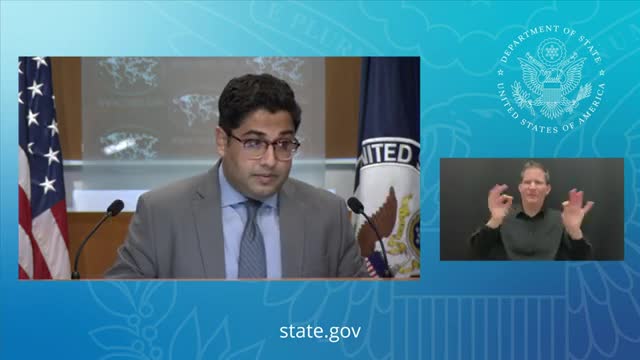
In a recent government meeting, officials addressed the ongoing conflict in Gaza following the death of a key militant leader, Mohammed Sinwar. The discussions highlighted the complexities surrounding the ceasefire proposals and the humanitarian situation in the region. Officials emphasized that Sinwar's death should not be misconstrued as a definitive end to the conflict, but rather as a potential opportunity to reinvigorate diplomatic efforts aimed at achieving a ceasefire and facilitating humanitarian aid.
The meeting underscored a significant escalation in violence since Sinwar's death, with reports indicating a sharp increase in casualties among Palestinians. Officials were questioned about allegations that Israel is pursuing a plan to depopulate Gaza and resettle it with Israeli settlers. In response, they firmly rejected such rhetoric, reiterating the U.S. commitment to supporting Palestinian-led governance in Gaza and opposing any long-term displacement of Palestinians.
Concerns were also raised regarding reports of the Israeli military using detainees as human shields. Officials acknowledged the seriousness of these allegations and stressed the importance of Israel conducting thorough investigations into any credible claims of violations.
On the humanitarian front, the U.S. is pressing Israel to enhance the flow of aid into Gaza, with recent reports indicating that 114 trucks crossed into the region. While officials noted this progress, they emphasized the need for a sustained and increased influx of humanitarian assistance, particularly as winter approaches. The discussions reflect ongoing U.S. efforts to balance support for Israel with the urgent need for humanitarian relief and a path toward lasting peace in the region.
The meeting underscored a significant escalation in violence since Sinwar's death, with reports indicating a sharp increase in casualties among Palestinians. Officials were questioned about allegations that Israel is pursuing a plan to depopulate Gaza and resettle it with Israeli settlers. In response, they firmly rejected such rhetoric, reiterating the U.S. commitment to supporting Palestinian-led governance in Gaza and opposing any long-term displacement of Palestinians.
Concerns were also raised regarding reports of the Israeli military using detainees as human shields. Officials acknowledged the seriousness of these allegations and stressed the importance of Israel conducting thorough investigations into any credible claims of violations.
On the humanitarian front, the U.S. is pressing Israel to enhance the flow of aid into Gaza, with recent reports indicating that 114 trucks crossed into the region. While officials noted this progress, they emphasized the need for a sustained and increased influx of humanitarian assistance, particularly as winter approaches. The discussions reflect ongoing U.S. efforts to balance support for Israel with the urgent need for humanitarian relief and a path toward lasting peace in the region.
View the Full Meeting & All Its Details
This article offers just a summary. Unlock complete video, transcripts, and insights as a Founder Member.
✓
Watch full, unedited meeting videos
✓
Search every word spoken in unlimited transcripts
✓
AI summaries & real-time alerts (all government levels)
✓
Permanent access to expanding government content
30-day money-back guarantee
