Landlord faces legal battle over lead contamination issues
October 16, 2024 | Lawrence City, Essex County, Massachusetts
This article was created by AI summarizing key points discussed. AI makes mistakes, so for full details and context, please refer to the video of the full meeting. Please report any errors so we can fix them. Report an error »
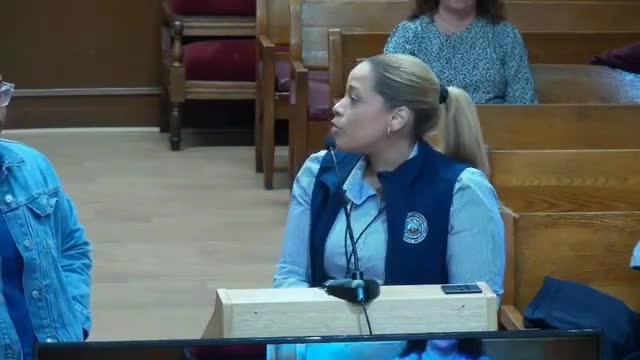
In a recent government meeting, officials discussed a troubling case involving a tenant's ongoing complaints about hazardous living conditions at a property located at 2632 Newton Street. The case, which has been under scrutiny since January 2024, centers around significant health violations, including lead contamination and a leaking roof.
Ginny Lara, a health inspector, presented the case, detailing that the tenant, George Rojas, had requested a lead determination inspection after one of his children tested positive for lead exposure. The inspection revealed multiple areas of lead presence, prompting the issuance of a correction order to the property owner, Alan Kusha. However, as of October, no remediation efforts had been undertaken, and many violations remained unaddressed.
The situation escalated when Rojas, represented by attorney Eric Salac, highlighted that the case had already been referred to housing court. Salac expressed frustration over the lack of action from the city to enforce the correction order against Kusha, who owns a substantial portfolio of properties in the area. He noted that despite multiple inspections and fines totaling approximately $1,300, the landlord had failed to comply with necessary repairs.
Ethan, a board member, acknowledged the complexity of the case, emphasizing that the eviction process and the enforcement of health orders are separate legal actions. He recommended that the city should file a separate action to compel the landlord to address the violations, as the current housing court proceedings were not sufficient to ensure tenant safety.
Kusha defended his actions, stating that he had made repairs, including a new roof, and was in the process of addressing the lead issue. He claimed that delays were partly due to the tenant's lack of cooperation in preparing the apartment for remediation.
The board ultimately concluded that while they could issue fines for violations, they lacked the authority to enforce compliance directly. They reiterated that the resolution of such disputes typically falls within the jurisdiction of housing court, where stronger legal measures can be applied.
As the meeting wrapped up, officials expressed concern over the recurring nature of such landlord-tenant disputes, highlighting the need for more robust enforcement mechanisms to protect tenants from unsafe living conditions. The case remains ongoing, with the potential for further legal action as the tenant seeks to ensure a safe environment for his family.
Ginny Lara, a health inspector, presented the case, detailing that the tenant, George Rojas, had requested a lead determination inspection after one of his children tested positive for lead exposure. The inspection revealed multiple areas of lead presence, prompting the issuance of a correction order to the property owner, Alan Kusha. However, as of October, no remediation efforts had been undertaken, and many violations remained unaddressed.
The situation escalated when Rojas, represented by attorney Eric Salac, highlighted that the case had already been referred to housing court. Salac expressed frustration over the lack of action from the city to enforce the correction order against Kusha, who owns a substantial portfolio of properties in the area. He noted that despite multiple inspections and fines totaling approximately $1,300, the landlord had failed to comply with necessary repairs.
Ethan, a board member, acknowledged the complexity of the case, emphasizing that the eviction process and the enforcement of health orders are separate legal actions. He recommended that the city should file a separate action to compel the landlord to address the violations, as the current housing court proceedings were not sufficient to ensure tenant safety.
Kusha defended his actions, stating that he had made repairs, including a new roof, and was in the process of addressing the lead issue. He claimed that delays were partly due to the tenant's lack of cooperation in preparing the apartment for remediation.
The board ultimately concluded that while they could issue fines for violations, they lacked the authority to enforce compliance directly. They reiterated that the resolution of such disputes typically falls within the jurisdiction of housing court, where stronger legal measures can be applied.
As the meeting wrapped up, officials expressed concern over the recurring nature of such landlord-tenant disputes, highlighting the need for more robust enforcement mechanisms to protect tenants from unsafe living conditions. The case remains ongoing, with the potential for further legal action as the tenant seeks to ensure a safe environment for his family.
View the Full Meeting & All Its Details
This article offers just a summary. Unlock complete video, transcripts, and insights as a Founder Member.
✓
Watch full, unedited meeting videos
✓
Search every word spoken in unlimited transcripts
✓
AI summaries & real-time alerts (all government levels)
✓
Permanent access to expanding government content
30-day money-back guarantee
