Court hears challenge to controversial geofence warrant practices
October 24, 2024 | Judge Stephanie Boyd 187th District, District Court Judges, Judicial, Texas
This article was created by AI summarizing key points discussed. AI makes mistakes, so for full details and context, please refer to the video of the full meeting. Please report any errors so we can fix them. Report an error »
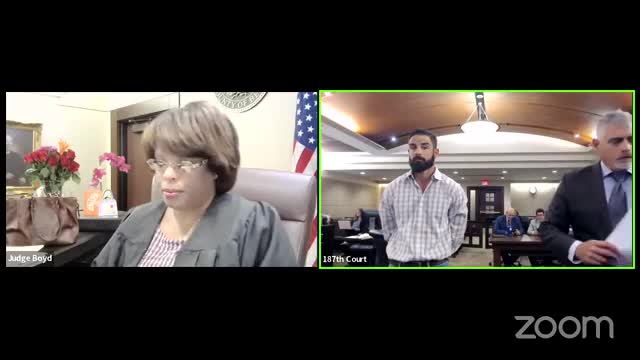
In a recent court hearing, the legality of geofence warrants was scrutinized in the case against Mr. Gallon, who is accused of wildlife violations. The discussion centered on the use of a geofence warrant obtained by game wardens to gather location data from Google, which ultimately led to the search of Gallon's residence and the seizure of evidence.
The defense argued that the geofence warrant constituted a \"dragnet\" approach, collecting data from numerous individuals without specific probable cause to target Gallon. They emphasized that such warrants violate the Fourth Amendment, which protects against unreasonable searches and seizures. The defense cited several legal precedents, including the U.S. Supreme Court's decision in *Carpenter v. United States*, which established a reasonable expectation of privacy in cell site location information (CSLI). They contended that the geofence warrant lacked the specificity required by law, sweeping in data from at least 72 individuals unrelated to the alleged crime.
The prosecution countered that the warrant was valid, arguing that it was supported by probable cause and sufficiently described the place to be searched. They maintained that the geofence warrant did not require law enforcement to have an identifiable suspect at the outset, as the probable cause standard is flexible and does not necessitate certainty.
The defense further argued that the lack of judicial oversight in the warrant process raises significant constitutional concerns, as the information gathered could include data from innocent parties. They asserted that the evidence obtained from the geofence warrant should be suppressed, as it was derived from an illegal search, invoking the \"fruit of the poisonous tree\" doctrine.
As the court deliberates on the admissibility of the evidence, the case highlights ongoing debates about privacy rights in the digital age and the implications of law enforcement's use of technology in investigations. The outcome could set a precedent for how geofence warrants are treated in future cases, particularly regarding the balance between effective law enforcement and the protection of individual privacy rights.
The defense argued that the geofence warrant constituted a \"dragnet\" approach, collecting data from numerous individuals without specific probable cause to target Gallon. They emphasized that such warrants violate the Fourth Amendment, which protects against unreasonable searches and seizures. The defense cited several legal precedents, including the U.S. Supreme Court's decision in *Carpenter v. United States*, which established a reasonable expectation of privacy in cell site location information (CSLI). They contended that the geofence warrant lacked the specificity required by law, sweeping in data from at least 72 individuals unrelated to the alleged crime.
The prosecution countered that the warrant was valid, arguing that it was supported by probable cause and sufficiently described the place to be searched. They maintained that the geofence warrant did not require law enforcement to have an identifiable suspect at the outset, as the probable cause standard is flexible and does not necessitate certainty.
The defense further argued that the lack of judicial oversight in the warrant process raises significant constitutional concerns, as the information gathered could include data from innocent parties. They asserted that the evidence obtained from the geofence warrant should be suppressed, as it was derived from an illegal search, invoking the \"fruit of the poisonous tree\" doctrine.
As the court deliberates on the admissibility of the evidence, the case highlights ongoing debates about privacy rights in the digital age and the implications of law enforcement's use of technology in investigations. The outcome could set a precedent for how geofence warrants are treated in future cases, particularly regarding the balance between effective law enforcement and the protection of individual privacy rights.
View the Full Meeting & All Its Details
This article offers just a summary. Unlock complete video, transcripts, and insights as a Founder Member.
✓
Watch full, unedited meeting videos
✓
Search every word spoken in unlimited transcripts
✓
AI summaries & real-time alerts (all government levels)
✓
Permanent access to expanding government content
30-day money-back guarantee
