Budget Proposal Sparks Debate Over IT Equipment Costs
October 25, 2024 | Ithaca City, Tompkins County, New York
This article was created by AI summarizing key points discussed. AI makes mistakes, so for full details and context, please refer to the video of the full meeting. Please report any errors so we can fix them. Report an error »
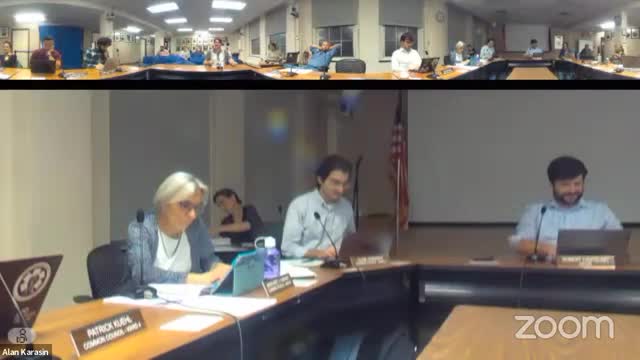
During a recent government meeting, officials discussed the upcoming budget for workstation replacements, which is set to increase by 20% to a total of $2.1 million for the next fiscal year. The discussion highlighted the importance of not only hardware but also the necessary software that accompanies user equipment, such as desktops, laptops, and tablets.
The IT department clarified that the term \"workstation replacement\" encompasses a wide range of user equipment, and the budget adjustments reflect a reorganization of costs associated with both hardware and software. While the hardware budget has decreased slightly, the software budget has risen significantly due to the shift towards a licensing model for software, which requires annual renewals for each user. This model contrasts with previous practices where software was purchased outright and used indefinitely.
Officials noted that the ongoing costs for software and hardware are essential for maintaining operations, particularly with approximately 400 active users. The IT department aims for a five-year replacement cycle for hardware, ensuring that equipment remains up-to-date and secure.
Concerns were raised about the substantial budget increase, with questions about potential cost-cutting measures and the frequency of software expenses. The IT department emphasized that these costs are part of the annual operational budget necessary for a functioning organization.
Additionally, discussions touched on the possibility of securing grant funding for equipment purchases, although the city often misses out on state and federal funds that typically favor counties. The city is working with a new grant administrator to explore available opportunities.
The meeting also explored the potential for efficiencies through shared purchasing agreements with other municipalities or the county. While some shared services are already in place, such as the electronic document management system, software licensing remains largely organization-specific due to regulatory requirements.
Overall, the meeting underscored the complexities of budgeting for technology in municipal operations, balancing the need for updated equipment with fiscal responsibility.
The IT department clarified that the term \"workstation replacement\" encompasses a wide range of user equipment, and the budget adjustments reflect a reorganization of costs associated with both hardware and software. While the hardware budget has decreased slightly, the software budget has risen significantly due to the shift towards a licensing model for software, which requires annual renewals for each user. This model contrasts with previous practices where software was purchased outright and used indefinitely.
Officials noted that the ongoing costs for software and hardware are essential for maintaining operations, particularly with approximately 400 active users. The IT department aims for a five-year replacement cycle for hardware, ensuring that equipment remains up-to-date and secure.
Concerns were raised about the substantial budget increase, with questions about potential cost-cutting measures and the frequency of software expenses. The IT department emphasized that these costs are part of the annual operational budget necessary for a functioning organization.
Additionally, discussions touched on the possibility of securing grant funding for equipment purchases, although the city often misses out on state and federal funds that typically favor counties. The city is working with a new grant administrator to explore available opportunities.
The meeting also explored the potential for efficiencies through shared purchasing agreements with other municipalities or the county. While some shared services are already in place, such as the electronic document management system, software licensing remains largely organization-specific due to regulatory requirements.
Overall, the meeting underscored the complexities of budgeting for technology in municipal operations, balancing the need for updated equipment with fiscal responsibility.
Don't Miss a Word: See the Full Meeting!
Go beyond summaries. Unlock every video, transcript, and key insight with a Founder Membership.
✓
Get instant access to full meeting videos
✓
Search and clip any phrase from complete transcripts
✓
Receive AI-powered summaries & custom alerts
✓
Enjoy lifetime, unrestricted access to government data
30-day money-back guarantee
