Transit Authority Proposes Major Fare Overhaul to Boost Ridership
October 24, 2024 | Metropolitan Council, Agencies, Boards, & Commissions, Executive, Minnesota
This article was created by AI summarizing key points discussed. AI makes mistakes, so for full details and context, please refer to the video of the full meeting. Please report any errors so we can fix them. Report an error »
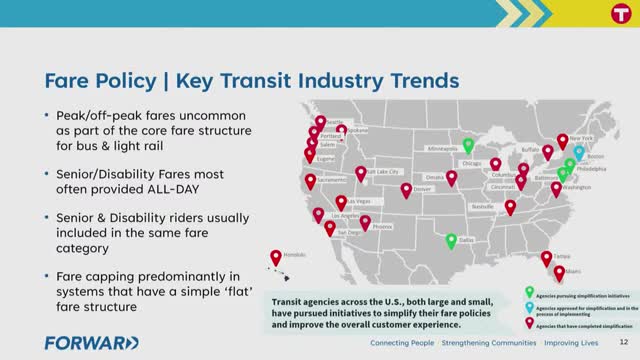
In a recent government meeting, officials discussed significant changes to the fare structure of local transit services, aiming to simplify pricing and enhance accessibility for riders. The proposed adjustments include the elimination of peak fares, which have seen a substantial decline in ridership since the pandemic. Data presented indicated a 65% reduction in morning peak and over 35% in evening peak ridership, prompting the decision to remove peak surcharges.
The meeting highlighted the introduction of fare capping, a system that allows riders to tap their transit cards and automatically transition to a daily or monthly pass once they reach a specified fare limit. This approach is designed to benefit frequent riders who may not fully utilize traditional monthly passes, thus preventing overcharging. Officials noted that similar systems have been successfully implemented in cities like New York, and they anticipate that this change will encourage more consistent use of public transit.
Additionally, the council discussed the success of the Transit Assistance Program (TAP), which provides eligible low-income customers with reduced fare options. The program has seen a notable increase in ridership, with a 14% rise in September 2024 compared to the previous year. Plans to extend TAP eligibility from one year to two years were also announced, aimed at reducing administrative burdens for both staff and customers.
The proposed fare simplification is expected to result in an annual increase of approximately 862,000 rides, although it will also lead to a projected revenue decrease of about $3.9 million in the short term. Officials expressed optimism that overall revenue would eventually stabilize and grow, albeit at a slower rate than previously anticipated.
These changes reflect a broader strategy to adapt transit services to current ridership patterns and improve accessibility for all users, particularly vulnerable populations. The council is set to vote on these proposals by the end of the year, with hopes of implementing the first phase of changes soon thereafter.
The meeting highlighted the introduction of fare capping, a system that allows riders to tap their transit cards and automatically transition to a daily or monthly pass once they reach a specified fare limit. This approach is designed to benefit frequent riders who may not fully utilize traditional monthly passes, thus preventing overcharging. Officials noted that similar systems have been successfully implemented in cities like New York, and they anticipate that this change will encourage more consistent use of public transit.
Additionally, the council discussed the success of the Transit Assistance Program (TAP), which provides eligible low-income customers with reduced fare options. The program has seen a notable increase in ridership, with a 14% rise in September 2024 compared to the previous year. Plans to extend TAP eligibility from one year to two years were also announced, aimed at reducing administrative burdens for both staff and customers.
The proposed fare simplification is expected to result in an annual increase of approximately 862,000 rides, although it will also lead to a projected revenue decrease of about $3.9 million in the short term. Officials expressed optimism that overall revenue would eventually stabilize and grow, albeit at a slower rate than previously anticipated.
These changes reflect a broader strategy to adapt transit services to current ridership patterns and improve accessibility for all users, particularly vulnerable populations. The council is set to vote on these proposals by the end of the year, with hopes of implementing the first phase of changes soon thereafter.
Don't Miss a Word: See the Full Meeting!
Go beyond summaries. Unlock every video, transcript, and key insight with a Founder Membership.
✓
Get instant access to full meeting videos
✓
Search and clip any phrase from complete transcripts
✓
Receive AI-powered summaries & custom alerts
✓
Enjoy lifetime, unrestricted access to government data
30-day money-back guarantee
