Fed interest rate cuts spark debate on economic impact
November 13, 2024 | Sparta Area School District, School Districts, Wisconsin
This article was created by AI summarizing key points discussed. AI makes mistakes, so for full details and context, please refer to the video of the full meeting. Please report any errors so we can fix them. Report an error »
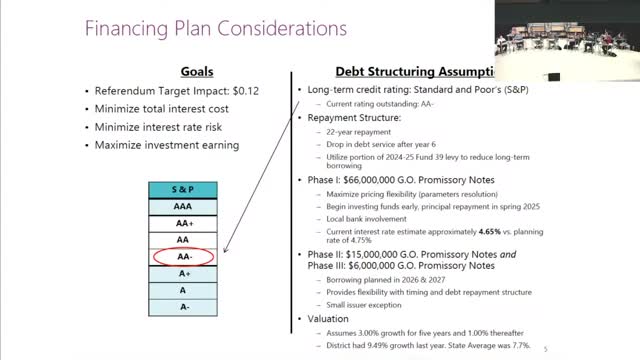
In a recent government meeting, officials discussed the implications of the Federal Reserve's interest rate changes on bond rates and the broader economy. The Federal Reserve's decision to lower its overnight lending rate by half a percent in September, followed by an additional quarter-point reduction, has led to a decrease in short-term investment rates, particularly for one- and two-year Treasury bonds. This trend is expected to continue, with economists predicting a further 25 basis point cut in December.
The meeting highlighted the Fed's ongoing efforts to combat high inflation, which has persisted for the past two years. By maintaining elevated consumer lending rates, including those for car and home loans, the Fed aims to reduce consumption and ultimately stabilize inflation. The discussions underscored the interconnectedness of the Fed's actions and the yield curve, particularly at the shorter end.
Officials also addressed concerns regarding the timing of locking in rates for a proposed $66 million borrowing. They emphasized the importance of acting before short-term rates decline further, which could diminish earning potential in project accounts. The strategy aims to maximize returns while adhering to federal tax regulations that allow for unrestricted earnings on amounts below $15 million.
Participants raised questions about the potential for refinancing should rates drop significantly in the future, noting that previous borrowing strategies had not yet yielded enough savings to warrant refinancing. The meeting concluded with a tentative timeline for future actions, reflecting the ongoing uncertainty in economic conditions and the Fed's policy direction.
The meeting highlighted the Fed's ongoing efforts to combat high inflation, which has persisted for the past two years. By maintaining elevated consumer lending rates, including those for car and home loans, the Fed aims to reduce consumption and ultimately stabilize inflation. The discussions underscored the interconnectedness of the Fed's actions and the yield curve, particularly at the shorter end.
Officials also addressed concerns regarding the timing of locking in rates for a proposed $66 million borrowing. They emphasized the importance of acting before short-term rates decline further, which could diminish earning potential in project accounts. The strategy aims to maximize returns while adhering to federal tax regulations that allow for unrestricted earnings on amounts below $15 million.
Participants raised questions about the potential for refinancing should rates drop significantly in the future, noting that previous borrowing strategies had not yet yielded enough savings to warrant refinancing. The meeting concluded with a tentative timeline for future actions, reflecting the ongoing uncertainty in economic conditions and the Fed's policy direction.
View the Full Meeting & All Its Details
This article offers just a summary. Unlock complete video, transcripts, and insights as a Founder Member.
✓
Watch full, unedited meeting videos
✓
Search every word spoken in unlimited transcripts
✓
AI summaries & real-time alerts (all government levels)
✓
Permanent access to expanding government content
30-day money-back guarantee
