City controller reveals alarming budget shortfall and cash crisis
November 14, 2024 | Minneapolis City, Hennepin County, Minnesota
This article was created by AI summarizing key points discussed. AI makes mistakes, so for full details and context, please refer to the video of the full meeting. Please report any errors so we can fix them. Report an error »
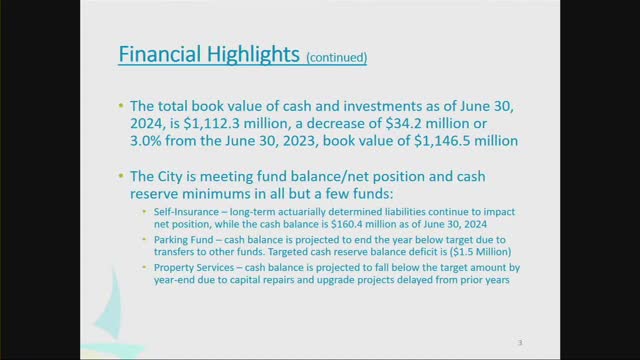
The City of Minneapolis is facing a projected deficit of approximately $1.5 million, with concerns that the property service cash balance may fall below target levels by year-end. This situation has been attributed to delays in capital repairs and upgrades from previous years.
During a recent government meeting, George Hargrove, the new city controller, provided an overview of the city's financial status, focusing on the general fund, which constitutes about 40% of the city's budget. As of June 30, the fund balance is forecasted at $168 million, reflecting a $42 million decrease from the previous year. Despite this decline, the fund balance remains above the policy target of 17%, which equates to approximately $114 million.
Hargrove noted that the original budget anticipated an $18 million decrease in the fund balance, but adjustments rolled over an additional $26 million from the previous year, leading to a planned use of $44 million from the fund balance. The city's cash position has also seen a significant drop, from $231 million at the end of 2023 to about $58 million, largely due to the timing of property tax payments.
On the revenue side, property taxes account for about 50% of the general fund, but projections indicate a shortfall of $16 million compared to the budget, primarily due to uncollectible amounts. Additionally, a $19 million deficit in state aid was highlighted, stemming from funds expected in 2024 that were received in December 2023 instead.
Hargrove emphasized the timing of revenue collection, noting that only 10% of revenue is typically received by March, with 60% expected by September and over 95% by year-end. This back-loaded revenue pattern contributes to the city's current cash flow challenges. The meeting concluded with discussions on expenditure management as the city navigates these financial hurdles.
During a recent government meeting, George Hargrove, the new city controller, provided an overview of the city's financial status, focusing on the general fund, which constitutes about 40% of the city's budget. As of June 30, the fund balance is forecasted at $168 million, reflecting a $42 million decrease from the previous year. Despite this decline, the fund balance remains above the policy target of 17%, which equates to approximately $114 million.
Hargrove noted that the original budget anticipated an $18 million decrease in the fund balance, but adjustments rolled over an additional $26 million from the previous year, leading to a planned use of $44 million from the fund balance. The city's cash position has also seen a significant drop, from $231 million at the end of 2023 to about $58 million, largely due to the timing of property tax payments.
On the revenue side, property taxes account for about 50% of the general fund, but projections indicate a shortfall of $16 million compared to the budget, primarily due to uncollectible amounts. Additionally, a $19 million deficit in state aid was highlighted, stemming from funds expected in 2024 that were received in December 2023 instead.
Hargrove emphasized the timing of revenue collection, noting that only 10% of revenue is typically received by March, with 60% expected by September and over 95% by year-end. This back-loaded revenue pattern contributes to the city's current cash flow challenges. The meeting concluded with discussions on expenditure management as the city navigates these financial hurdles.
View the Full Meeting & All Its Details
This article offers just a summary. Unlock complete video, transcripts, and insights as a Founder Member.
✓
Watch full, unedited meeting videos
✓
Search every word spoken in unlimited transcripts
✓
AI summaries & real-time alerts (all government levels)
✓
Permanent access to expanding government content
30-day money-back guarantee
