Clear Lake faces critical water flow challenges
November 14, 2024 | Utah Water Rights, Utah Department of Natural Resources, Offices, Departments, and Divisions, Organizations, Utah Executive Branch, Utah
This article was created by AI summarizing key points discussed. AI makes mistakes, so for full details and context, please refer to the video of the full meeting. Please report any errors so we can fix them. Report an error »
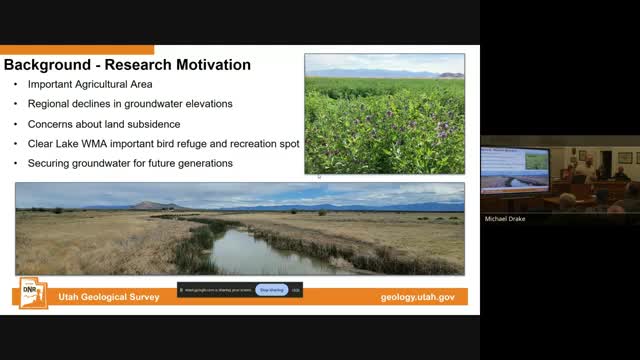
The discussion included a detailed analysis of groundwater movement, primarily recharged by snowfall from the Pavant Range, with significant contributions from the Aluba aquifer fans. The geological structure of the area, characterized by thick clay layers juxtaposed against highly transmissive volcanic formations, plays a crucial role in water flow and recharge patterns.
Historical studies dating back to 1911 by the United States Geological Survey (USGS) were referenced, illustrating the valley's hydrological significance. These studies laid the groundwork for understanding the region's water resources, documenting artesian flows, and assessing the impacts of groundwater extraction on local ecosystems.
Clear Lake was identified as the only known natural discharge point for the valley, with its ecological importance underscored by its role as a migratory bird habitat and recreational area. Recent observations indicated significant changes in water levels and visitation patterns at Clear Lake, particularly following a substantial water year in 2023.
The meeting concluded with a call to action for ongoing monitoring and management of water resources, using indicators such as the health of the least chub, a state conservation species, to gauge ecosystem vitality. The discussions underscored the need for sustainable practices to ensure that Utah's water resources remain viable for future generations.
View the Full Meeting & All Its Details
This article offers just a summary. Unlock complete video, transcripts, and insights as a Founder Member.
30-day money-back guarantee
