Court grapples with deadly force and self defense complexities
November 01, 2024 | Judicial - Supreme Court, Judicial, Massachusetts
This article was created by AI summarizing key points discussed. AI makes mistakes, so for full details and context, please refer to the video of the full meeting. Please report any errors so we can fix them. Report an error »
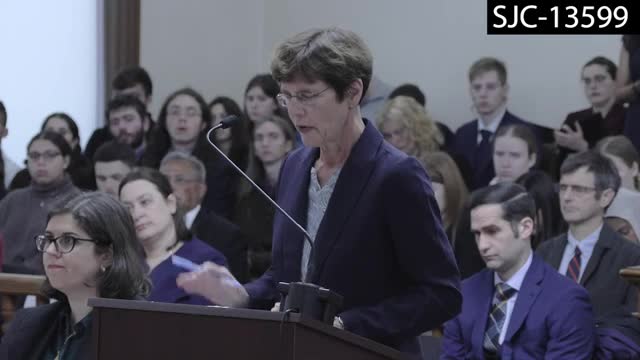
In a recent government meeting, discussions centered around the complexities of self-defense and defense of another in legal contexts, particularly in relation to a case involving a violent altercation. The meeting highlighted the critical role of determining the first aggressor in incidents where deadly force is used, with a focus on the implications of allowing propensity evidence in court.
Key points of contention arose regarding the admissibility of evidence indicating that the alleged victim was the first aggressor. The judge's decision to include evidence of a prior incident where the defendant, Griffith, was allegedly the first aggressor with a knife was deemed prejudicial, necessitating a new trial. This ruling underscores the importance of establishing who initiated violence in self-defense cases, as it can significantly influence jury perceptions and outcomes.
Participants in the meeting debated the nuances between self-defense and defense of another, noting that while both rely on similar evidence, the introduction of a third party complicates the legal analysis. The discussion revealed that the majority of states, along with federal courts, permit the use of propensity evidence based on reputation rather than specific acts of violence, which could impact how juries interpret the actions of defendants in these scenarios.
The conversation also touched on the challenges juries face when distinguishing between self-defense and defense of another, particularly in cases where perceptions of aggression are subjective. The complexities of these legal definitions and their implications for justice were a focal point, with participants acknowledging the potential for confusion among jurors when evaluating cases involving multiple parties and conflicting narratives.
Overall, the meeting illuminated the ongoing legal debates surrounding self-defense and defense of another, emphasizing the need for clarity in the law to ensure fair trials and just outcomes in violent altercations.
Key points of contention arose regarding the admissibility of evidence indicating that the alleged victim was the first aggressor. The judge's decision to include evidence of a prior incident where the defendant, Griffith, was allegedly the first aggressor with a knife was deemed prejudicial, necessitating a new trial. This ruling underscores the importance of establishing who initiated violence in self-defense cases, as it can significantly influence jury perceptions and outcomes.
Participants in the meeting debated the nuances between self-defense and defense of another, noting that while both rely on similar evidence, the introduction of a third party complicates the legal analysis. The discussion revealed that the majority of states, along with federal courts, permit the use of propensity evidence based on reputation rather than specific acts of violence, which could impact how juries interpret the actions of defendants in these scenarios.
The conversation also touched on the challenges juries face when distinguishing between self-defense and defense of another, particularly in cases where perceptions of aggression are subjective. The complexities of these legal definitions and their implications for justice were a focal point, with participants acknowledging the potential for confusion among jurors when evaluating cases involving multiple parties and conflicting narratives.
Overall, the meeting illuminated the ongoing legal debates surrounding self-defense and defense of another, emphasizing the need for clarity in the law to ensure fair trials and just outcomes in violent altercations.
View the Full Meeting & All Its Details
This article offers just a summary. Unlock complete video, transcripts, and insights as a Founder Member.
✓
Watch full, unedited meeting videos
✓
Search every word spoken in unlimited transcripts
✓
AI summaries & real-time alerts (all government levels)
✓
Permanent access to expanding government content
30-day money-back guarantee
