City Council Debates Parking Solutions Amid Growing Concerns
November 14, 2024 | Lebanon, Linn County, Oregon
This article was created by AI summarizing key points discussed. AI makes mistakes, so for full details and context, please refer to the video of the full meeting. Please report any errors so we can fix them. Report an error »
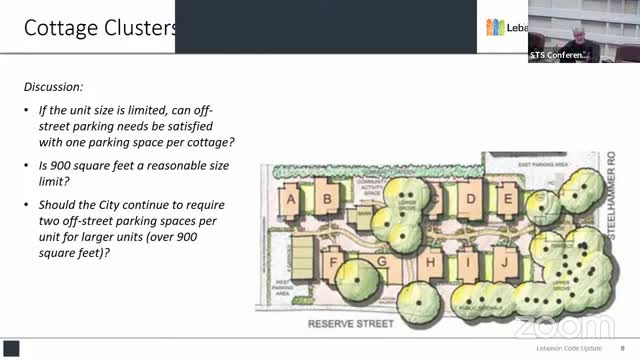
During a recent government meeting, officials discussed pressing parking issues in neighborhoods, particularly in areas already facing congestion. The conversation highlighted the challenges posed by new developments in densely populated regions, where street parking is often limited.
One key point raised was the city code's current requirement for new developments to provide only one parking space per unit, which many officials believe is insufficient. Concerns were voiced about the implications of this policy, especially in neighborhoods where residents typically own multiple vehicles. Several council members advocated for increasing the parking requirement to two spaces per unit, citing the need for adequate parking for families and visitors.
The discussion also touched on the broader context of housing development, with officials noting that the existing code may deter the construction of cottage clusters—small, community-oriented housing developments—due to restrictive parking regulations. Currently, the city mandates 2.25 parking spaces per unit for apartment complexes, but many developers seek reductions, leading to a net decrease in available parking.
As the meeting progressed, there was a consensus to explore the feasibility of adjusting parking requirements to better align with community needs while still considering future growth and state regulations. The council plans to further study the potential for a parking-per-bedroom model, which could provide a more tailored approach to parking in new developments.
In addition to parking, the meeting also included updates on regulations for manufactured homes and prefabricated dwellings, indicating ongoing efforts to refine housing policies in response to community needs. The discussions reflect a growing recognition of the complexities surrounding urban development and the necessity for adaptable policies that accommodate both current residents and future growth.
One key point raised was the city code's current requirement for new developments to provide only one parking space per unit, which many officials believe is insufficient. Concerns were voiced about the implications of this policy, especially in neighborhoods where residents typically own multiple vehicles. Several council members advocated for increasing the parking requirement to two spaces per unit, citing the need for adequate parking for families and visitors.
The discussion also touched on the broader context of housing development, with officials noting that the existing code may deter the construction of cottage clusters—small, community-oriented housing developments—due to restrictive parking regulations. Currently, the city mandates 2.25 parking spaces per unit for apartment complexes, but many developers seek reductions, leading to a net decrease in available parking.
As the meeting progressed, there was a consensus to explore the feasibility of adjusting parking requirements to better align with community needs while still considering future growth and state regulations. The council plans to further study the potential for a parking-per-bedroom model, which could provide a more tailored approach to parking in new developments.
In addition to parking, the meeting also included updates on regulations for manufactured homes and prefabricated dwellings, indicating ongoing efforts to refine housing policies in response to community needs. The discussions reflect a growing recognition of the complexities surrounding urban development and the necessity for adaptable policies that accommodate both current residents and future growth.
View the Full Meeting & All Its Details
This article offers just a summary. Unlock complete video, transcripts, and insights as a Founder Member.
✓
Watch full, unedited meeting videos
✓
Search every word spoken in unlimited transcripts
✓
AI summaries & real-time alerts (all government levels)
✓
Permanent access to expanding government content
30-day money-back guarantee
