Waste Economy Exposed as Africa Struggles with Electronic Junk
This article was created by AI summarizing key points discussed. AI makes mistakes, so for full details and context, please refer to the video of the full meeting. Please report any errors so we can fix them. Report an error »
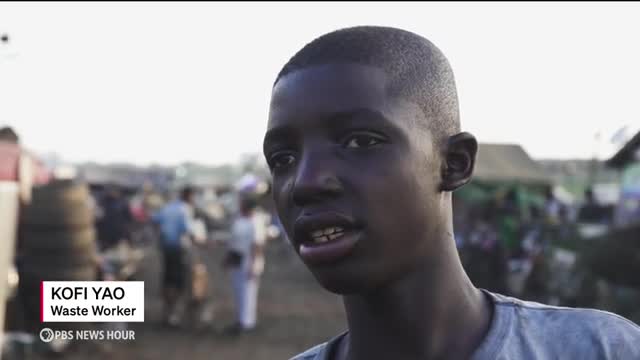
In a poignant exploration of the lives of young workers in a waste economy, 14-year-old Jefferson Phillip shared his aspirations of becoming a doctor while working after school to help pay his school fees. His story reflects a broader narrative of struggle and ambition among youth in regions facing economic hardship. Similarly, Mohammed Awal, who migrated from northern Ghana at 14 after losing his father, has spent 15 years working to support his family, expressing a desire to travel to Europe for better opportunities.
The global recycling industry, as highlighted by University of California Berkeley professor Kate O'Neil, plays a significant role in the livelihoods of approximately 20 million people worldwide who rely on waste for their income. O'Neil emphasizes the need for a transition from a waste economy to a repair and reuse economy, particularly in developing countries where markets for secondhand and refurbished goods are thriving. However, she warns that much of the electronic waste sent to these regions is often difficult to recycle due to planned obsolescence in product design.
Larry Katoi from Ghana's Environmental Protection Agency calls for developed nations to enhance oversight of their waste exports, arguing that they possess the resources to distinguish between usable items and junk. This sentiment was echoed by local merchant Yakubu Salifu, who criticized the influx of waste from wealthier countries, asserting that it burdens African communities with environmental hazards.
The conversation underscores a critical issue: the environmental impact of electronic waste, much of which originates from Europe and the U.S., and the subsequent pollution that affects local ecosystems. As the series continues, it will delve deeper into the origins of this waste and its implications for communities grappling with the consequences of a globalized waste economy.
The global recycling industry, as highlighted by University of California Berkeley professor Kate O'Neil, plays a significant role in the livelihoods of approximately 20 million people worldwide who rely on waste for their income. O'Neil emphasizes the need for a transition from a waste economy to a repair and reuse economy, particularly in developing countries where markets for secondhand and refurbished goods are thriving. However, she warns that much of the electronic waste sent to these regions is often difficult to recycle due to planned obsolescence in product design.
Larry Katoi from Ghana's Environmental Protection Agency calls for developed nations to enhance oversight of their waste exports, arguing that they possess the resources to distinguish between usable items and junk. This sentiment was echoed by local merchant Yakubu Salifu, who criticized the influx of waste from wealthier countries, asserting that it burdens African communities with environmental hazards.
The conversation underscores a critical issue: the environmental impact of electronic waste, much of which originates from Europe and the U.S., and the subsequent pollution that affects local ecosystems. As the series continues, it will delve deeper into the origins of this waste and its implications for communities grappling with the consequences of a globalized waste economy.
View the Full Meeting & All Its Details
This article offers just a summary. Unlock complete video, transcripts, and insights as a Founder Member.
✓
Watch full, unedited meeting videos
✓
Search every word spoken in unlimited transcripts
✓
AI summaries & real-time alerts (all government levels)
✓
Permanent access to expanding government content
30-day money-back guarantee
