Community members demand accountability in school construction debate
November 15, 2024 | Arrowhead UHS School District, School Districts, Wisconsin
This article was created by AI summarizing key points discussed. AI makes mistakes, so for full details and context, please refer to the video of the full meeting. Please report any errors so we can fix them. Report an error »
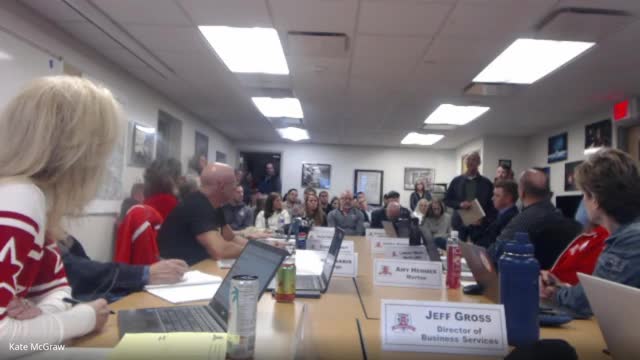
During a recent school board meeting, community members expressed strong opinions regarding the district's plans for a new school and the management of existing facilities. The discussions highlighted concerns about fiscal responsibility, transparency, and the prioritization of educational needs.
One resident criticized the board for opting to demolish older buildings instead of budgeting for necessary repairs, stating, \"You just don't knock down buildings.\" This sentiment was echoed by others who emphasized the importance of maintaining existing structures and questioned the board's decision-making process. Several speakers urged the board to reconsider its approach, suggesting that community input and local resources could be better utilized to address facility issues.
Concerns were raised about the district's administrative overhead, with calls for a reduction in management positions to allocate more resources directly to classrooms. A resident pointed out that the district's open enrollment had nearly doubled, prompting questions about the financial implications of bringing in additional students without a corresponding increase in funding.
Another speaker, a general contractor, offered to donate materials and labor for minor repairs, highlighting a willingness within the community to contribute to the district's needs. This offer was met with appreciation from board members, who acknowledged the importance of community involvement in addressing facility challenges.
Superintendent Barner defended the board's actions, stating that the decision-making process had been transparent and community-driven. He emphasized that the board had engaged with residents over the past 15 months to gather feedback and prioritize needs, ultimately leading to the recent referendum.
Despite the board's efforts, the referendum did not pass, leading to discussions about the next steps and the need for continued community engagement. Board members expressed gratitude for the turnout at the meeting, recognizing the importance of public participation in shaping the future of the district.
As the board moves forward, it faces the challenge of rebuilding trust with the community while addressing pressing facility issues and ensuring that educational needs are met effectively.
One resident criticized the board for opting to demolish older buildings instead of budgeting for necessary repairs, stating, \"You just don't knock down buildings.\" This sentiment was echoed by others who emphasized the importance of maintaining existing structures and questioned the board's decision-making process. Several speakers urged the board to reconsider its approach, suggesting that community input and local resources could be better utilized to address facility issues.
Concerns were raised about the district's administrative overhead, with calls for a reduction in management positions to allocate more resources directly to classrooms. A resident pointed out that the district's open enrollment had nearly doubled, prompting questions about the financial implications of bringing in additional students without a corresponding increase in funding.
Another speaker, a general contractor, offered to donate materials and labor for minor repairs, highlighting a willingness within the community to contribute to the district's needs. This offer was met with appreciation from board members, who acknowledged the importance of community involvement in addressing facility challenges.
Superintendent Barner defended the board's actions, stating that the decision-making process had been transparent and community-driven. He emphasized that the board had engaged with residents over the past 15 months to gather feedback and prioritize needs, ultimately leading to the recent referendum.
Despite the board's efforts, the referendum did not pass, leading to discussions about the next steps and the need for continued community engagement. Board members expressed gratitude for the turnout at the meeting, recognizing the importance of public participation in shaping the future of the district.
As the board moves forward, it faces the challenge of rebuilding trust with the community while addressing pressing facility issues and ensuring that educational needs are met effectively.
View the Full Meeting & All Its Details
This article offers just a summary. Unlock complete video, transcripts, and insights as a Founder Member.
✓
Watch full, unedited meeting videos
✓
Search every word spoken in unlimited transcripts
✓
AI summaries & real-time alerts (all government levels)
✓
Permanent access to expanding government content
30-day money-back guarantee
