Juror's Misstep Raises Questions in High-Stakes Trial
November 05, 2024 | Judicial - Supreme Court, Judicial, Massachusetts
This article was created by AI summarizing key points discussed. AI makes mistakes, so for full details and context, please refer to the video of the full meeting. Please report any errors so we can fix them. Report an error »
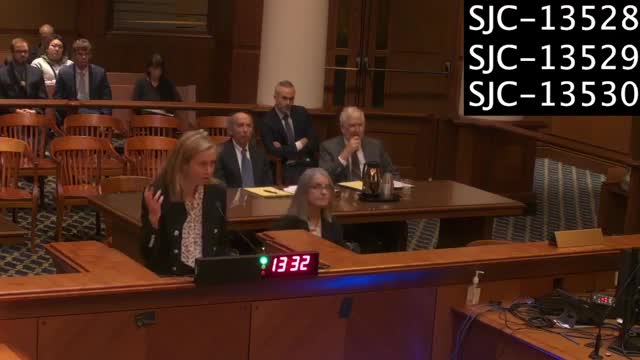
In a recent court hearing, discussions centered around the implications of a juror's responses regarding her familial relationship with a defendant, Carl Baxter. The juror, who identified Baxter as her half-brother, faced scrutiny for her failure to disclose this connection during jury selection. The crux of the debate revolved around whether her inaccurate response was intentional or a misunderstanding of the relevance of the question posed.
Legal representatives argued that the juror's determination of relevance was flawed, suggesting that the remedy should not be a new trial but rather a hearing to assess her motives and the context of her answers. The judge emphasized the importance of understanding the juror's demeanor and the nuances lost in the written transcript, which could provide critical insights into her thought process during the questioning.
The juror acknowledged her familial connection but claimed she did not believe it was pertinent to the trial, stating, \"I didn't think he had any relation to this trial.\" This statement raised concerns about the juror's interpretation of what constitutes family and relevance in a legal context. The discussion highlighted the complexity of familial relationships, particularly in cases where individuals may have limited interactions, as was the case with Baxter, whom the juror had only recently learned about through a newspaper article.
The hearing also referenced a precedent case, McDonough Power Equipment, which dealt with juror disclosures and the subjective nature of personal experiences. The legal team argued that while the concept of family can vary widely among individuals, the juror's acknowledgment of Baxter as family should have prompted a more accurate disclosure.
Ultimately, the court is tasked with determining whether the juror's actions constituted a breach of duty and how best to address the potential impact on the trial's integrity. The outcome of this hearing could set important precedents regarding juror honesty and the interpretation of familial relationships in legal proceedings.
Legal representatives argued that the juror's determination of relevance was flawed, suggesting that the remedy should not be a new trial but rather a hearing to assess her motives and the context of her answers. The judge emphasized the importance of understanding the juror's demeanor and the nuances lost in the written transcript, which could provide critical insights into her thought process during the questioning.
The juror acknowledged her familial connection but claimed she did not believe it was pertinent to the trial, stating, \"I didn't think he had any relation to this trial.\" This statement raised concerns about the juror's interpretation of what constitutes family and relevance in a legal context. The discussion highlighted the complexity of familial relationships, particularly in cases where individuals may have limited interactions, as was the case with Baxter, whom the juror had only recently learned about through a newspaper article.
The hearing also referenced a precedent case, McDonough Power Equipment, which dealt with juror disclosures and the subjective nature of personal experiences. The legal team argued that while the concept of family can vary widely among individuals, the juror's acknowledgment of Baxter as family should have prompted a more accurate disclosure.
Ultimately, the court is tasked with determining whether the juror's actions constituted a breach of duty and how best to address the potential impact on the trial's integrity. The outcome of this hearing could set important precedents regarding juror honesty and the interpretation of familial relationships in legal proceedings.
Don't Miss a Word: See the Full Meeting!
Go beyond summaries. Unlock every video, transcript, and key insight with a Founder Membership.
✓
Get instant access to full meeting videos
✓
Search and clip any phrase from complete transcripts
✓
Receive AI-powered summaries & custom alerts
✓
Enjoy lifetime, unrestricted access to government data
30-day money-back guarantee
