Eugene proposes bold measures to combat systemic inequity
November 04, 2024 | Eugene , Lane County, Oregon
This article was created by AI summarizing key points discussed. AI makes mistakes, so for full details and context, please refer to the video of the full meeting. Please report any errors so we can fix them. Report an error »
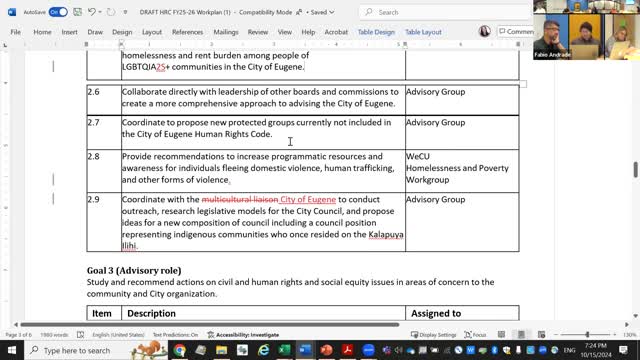
In a recent government meeting, officials in Eugene discussed several initiatives aimed at enhancing human rights and addressing systemic inequities within the community. Key proposals included the establishment of new protected groups under the city's human rights code, with a focus on increasing resources and awareness for individuals affected by domestic violence, human trafficking, and other forms of violence.
A significant recommendation was made to coordinate outreach efforts and legislative research to inform the city council about potential new council compositions. This includes the introduction of a council position specifically representing indigenous communities, acknowledging their historical presence in the region.
The meeting also revisited Council Resolution 3274, which condemns white nationalism and alt-right activities. Participants emphasized the need for community engagement to identify and address local street names and places that may honor or glorify white supremacy.
Economic equity was another focal point, with discussions centered on supporting populations facing systemic economic disadvantages. Officials proposed evaluating current economic development incentives through a racial justice lens and making necessary modifications to enhance access to capital and wealth creation opportunities.
Additionally, the meeting highlighted the importance of reviewing city personnel performance frameworks to incorporate public input, although concerns were raised regarding the Human Rights Commission's role in this area.
Lastly, the group committed to researching best practices from other cities in addressing systemic inequity and promoting diversity, equity, and inclusion. Recommendations will also be made to improve city communications, particularly in relation to culturally marginalized communities, including LGBTQ individuals, religious minorities, and people with disabilities.
A significant recommendation was made to coordinate outreach efforts and legislative research to inform the city council about potential new council compositions. This includes the introduction of a council position specifically representing indigenous communities, acknowledging their historical presence in the region.
The meeting also revisited Council Resolution 3274, which condemns white nationalism and alt-right activities. Participants emphasized the need for community engagement to identify and address local street names and places that may honor or glorify white supremacy.
Economic equity was another focal point, with discussions centered on supporting populations facing systemic economic disadvantages. Officials proposed evaluating current economic development incentives through a racial justice lens and making necessary modifications to enhance access to capital and wealth creation opportunities.
Additionally, the meeting highlighted the importance of reviewing city personnel performance frameworks to incorporate public input, although concerns were raised regarding the Human Rights Commission's role in this area.
Lastly, the group committed to researching best practices from other cities in addressing systemic inequity and promoting diversity, equity, and inclusion. Recommendations will also be made to improve city communications, particularly in relation to culturally marginalized communities, including LGBTQ individuals, religious minorities, and people with disabilities.
View the Full Meeting & All Its Details
This article offers just a summary. Unlock complete video, transcripts, and insights as a Founder Member.
✓
Watch full, unedited meeting videos
✓
Search every word spoken in unlimited transcripts
✓
AI summaries & real-time alerts (all government levels)
✓
Permanent access to expanding government content
30-day money-back guarantee
