Residents Demand Water Safety Tests Amid Solar Facility Concerns
November 18, 2024 | Lawrence, Douglas County, Kansas
This article was created by AI summarizing key points discussed. AI makes mistakes, so for full details and context, please refer to the video of the full meeting. Please report any errors so we can fix them. Report an error »
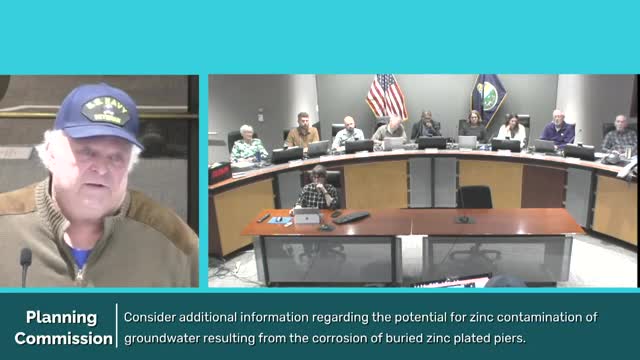
In a recent government meeting, concerns were raised regarding the potential contamination of groundwater from solar facility operations. Residents expressed apprehension about the safety of their drinking water, particularly regarding the risk of zinc contamination and the adequacy of current testing protocols.
One resident highlighted the importance of precautionary measures, stating, \"Who wants to take a chance?\" He emphasized that while their wells may not currently show signs of contamination, the possibility remains, and the community should not ignore it. Another speaker, Travis Hardy, echoed these sentiments, advocating for more extensive groundwater testing and a greater distance from water sources for solar facility installations to mitigate runoff risks.
Mary, a representative from the zoning office, noted that no specific testing for zinc had been conducted at existing facilities, as they relied on resident complaints to gauge water quality. This lack of proactive testing raised concerns among community members, who argued that it is better to be safe than sorry, especially when it comes to public health.
Michael Allman, a local water purification system seller, urged the commission to adopt a precautionary principle, citing the variability in soil corrosivity and the potential for contamination. He criticized the notion of ignoring testing, suggesting that it could lead to unforeseen health issues down the line.
The discussion also touched on the regulatory framework for future solar projects, clarifying that the meeting was not about a specific project but rather about establishing guidelines for future developments. Some commissioners questioned the rationale behind not requiring testing, emphasizing the unknowns associated with long-term impacts on groundwater.
As the meeting concluded, the consensus among many residents was clear: proactive measures and thorough testing are essential to safeguard their drinking water and ensure community health. The dialogue underscored the ongoing tension between development and environmental protection, a theme likely to resonate in future discussions as solar energy projects continue to expand.
One resident highlighted the importance of precautionary measures, stating, \"Who wants to take a chance?\" He emphasized that while their wells may not currently show signs of contamination, the possibility remains, and the community should not ignore it. Another speaker, Travis Hardy, echoed these sentiments, advocating for more extensive groundwater testing and a greater distance from water sources for solar facility installations to mitigate runoff risks.
Mary, a representative from the zoning office, noted that no specific testing for zinc had been conducted at existing facilities, as they relied on resident complaints to gauge water quality. This lack of proactive testing raised concerns among community members, who argued that it is better to be safe than sorry, especially when it comes to public health.
Michael Allman, a local water purification system seller, urged the commission to adopt a precautionary principle, citing the variability in soil corrosivity and the potential for contamination. He criticized the notion of ignoring testing, suggesting that it could lead to unforeseen health issues down the line.
The discussion also touched on the regulatory framework for future solar projects, clarifying that the meeting was not about a specific project but rather about establishing guidelines for future developments. Some commissioners questioned the rationale behind not requiring testing, emphasizing the unknowns associated with long-term impacts on groundwater.
As the meeting concluded, the consensus among many residents was clear: proactive measures and thorough testing are essential to safeguard their drinking water and ensure community health. The dialogue underscored the ongoing tension between development and environmental protection, a theme likely to resonate in future discussions as solar energy projects continue to expand.
Don't Miss a Word: See the Full Meeting!
Go beyond summaries. Unlock every video, transcript, and key insight with a Founder Membership.
✓
Get instant access to full meeting videos
✓
Search and clip any phrase from complete transcripts
✓
Receive AI-powered summaries & custom alerts
✓
Enjoy lifetime, unrestricted access to government data
30-day money-back guarantee
