Controversial travel board vote raises concerns over election integrity
November 05, 2024 | Monroe County, Indiana
This article was created by AI summarizing key points discussed. AI makes mistakes, so for full details and context, please refer to the video of the full meeting. Please report any errors so we can fix them. Report an error »
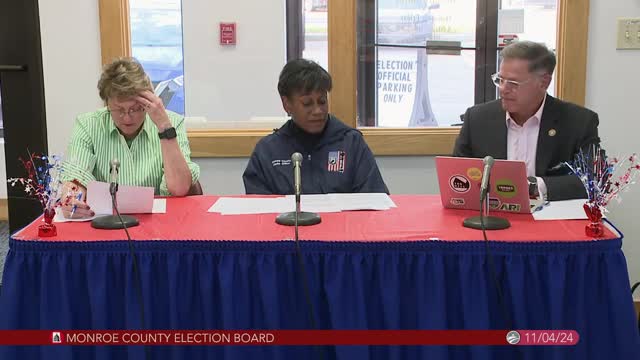
During a recent government meeting, officials discussed two requests for absentee voting due to illness or injury, one from Greencastle, Indiana, and another from Chicago, Illinois. The Greencastle request involved sending a bipartisan team to facilitate voting at a medical facility, which was deemed manageable given the proximity and established procedures.
However, the Chicago request raised significant concerns among officials. The distance—approximately five hours each way—complicated the logistics of sending a team to assist with voting. Officials debated the feasibility of scanning a ballot to the voter, allowing them to mark it, and then remaking the ballot in Indiana. This approach, however, would require the voter to waive their right to secrecy, which sparked discomfort regarding the precedent it might set for future absentee voting requests.
One official recalled a past instance where a bipartisan team was sent to a hospital for a voter who had been in an accident, suggesting that the Greencastle request was similar. However, the Chicago case was unprecedented, as it involved crossing state lines for a travel board request. Concerns were raised about verifying the voter's identity and ensuring the integrity of the voting process.
To address these issues, officials proposed tabling the Chicago request until they could consult with the Indiana Election Division (IED) for guidance on the legal and procedural implications. The meeting underscored the complexities of absentee voting logistics, particularly in cases involving significant distances and cross-state considerations.
However, the Chicago request raised significant concerns among officials. The distance—approximately five hours each way—complicated the logistics of sending a team to assist with voting. Officials debated the feasibility of scanning a ballot to the voter, allowing them to mark it, and then remaking the ballot in Indiana. This approach, however, would require the voter to waive their right to secrecy, which sparked discomfort regarding the precedent it might set for future absentee voting requests.
One official recalled a past instance where a bipartisan team was sent to a hospital for a voter who had been in an accident, suggesting that the Greencastle request was similar. However, the Chicago case was unprecedented, as it involved crossing state lines for a travel board request. Concerns were raised about verifying the voter's identity and ensuring the integrity of the voting process.
To address these issues, officials proposed tabling the Chicago request until they could consult with the Indiana Election Division (IED) for guidance on the legal and procedural implications. The meeting underscored the complexities of absentee voting logistics, particularly in cases involving significant distances and cross-state considerations.
Don't Miss a Word: See the Full Meeting!
Go beyond summaries. Unlock every video, transcript, and key insight with a Founder Membership.
✓
Get instant access to full meeting videos
✓
Search and clip any phrase from complete transcripts
✓
Receive AI-powered summaries & custom alerts
✓
Enjoy lifetime, unrestricted access to government data
30-day money-back guarantee
