Community divided over controversial residential development plan
November 15, 2024 | Planning Meetings, Knoxville City, Knox County, Tennessee
This article was created by AI summarizing key points discussed. AI makes mistakes, so for full details and context, please refer to the video of the full meeting. Please report any errors so we can fix them. Report an error »
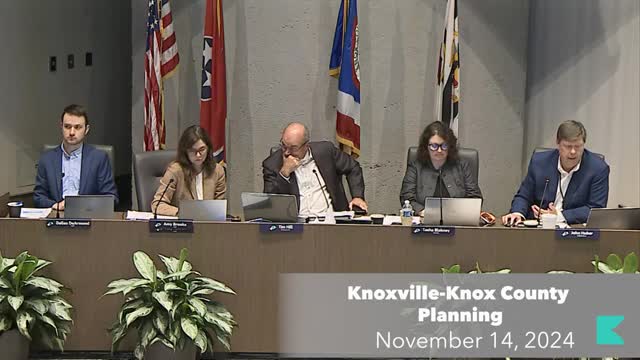
In a recent Knox County government meeting, significant motions were made regarding residential development plans that have sparked community concern. Vice Chair Huber initiated a series of motions that led to the approval of alternative design standards and a concept plan for a new residential subdivision, which will include up to 161 detached residential lots and 8 estate lots, totaling 169 lots. These motions were seconded by Commissioner Barger and passed unanimously.
The meeting also addressed a proposed subdivision on Asheville Highway, which is set to include 114 attached residential units. This proposal requires three motions, including a variance to adjust road specifications due to the steep terrain of the property. The Knox County Department of Engineering and Public Works has recommended approval of this variance, citing unique topographical challenges and asserting that the development would not pose a threat to public safety.
However, the proposal has faced opposition from local residents. John Lamb, a neighboring property owner, expressed concerns about the density of the development, potential traffic hazards, and the impact on local schools, which he described as already overburdened. He highlighted the narrow roads in the area and the potential for increased accidents due to the influx of new residents.
Keith Poveda, another local resident, echoed these concerns, arguing that the proposed location is unsuitable for high-density housing. He called for a deferral of the decision to allow the community more time to gather information and present their case. Poveda emphasized the need for careful consideration of traffic patterns and safety, particularly given the area's history of accidents.
Despite the opposition, some commissioners defended the development, citing the need for more housing in the area and the strategic location within the urban growth boundary. They noted that the project aligns with the county's goals for managed growth and urban density.
The meeting concluded with a commitment to further discussions on the development's implications, particularly regarding infrastructure and community safety, as the planning commission navigates the balance between growth and resident concerns.
The meeting also addressed a proposed subdivision on Asheville Highway, which is set to include 114 attached residential units. This proposal requires three motions, including a variance to adjust road specifications due to the steep terrain of the property. The Knox County Department of Engineering and Public Works has recommended approval of this variance, citing unique topographical challenges and asserting that the development would not pose a threat to public safety.
However, the proposal has faced opposition from local residents. John Lamb, a neighboring property owner, expressed concerns about the density of the development, potential traffic hazards, and the impact on local schools, which he described as already overburdened. He highlighted the narrow roads in the area and the potential for increased accidents due to the influx of new residents.
Keith Poveda, another local resident, echoed these concerns, arguing that the proposed location is unsuitable for high-density housing. He called for a deferral of the decision to allow the community more time to gather information and present their case. Poveda emphasized the need for careful consideration of traffic patterns and safety, particularly given the area's history of accidents.
Despite the opposition, some commissioners defended the development, citing the need for more housing in the area and the strategic location within the urban growth boundary. They noted that the project aligns with the county's goals for managed growth and urban density.
The meeting concluded with a commitment to further discussions on the development's implications, particularly regarding infrastructure and community safety, as the planning commission navigates the balance between growth and resident concerns.
Don't Miss a Word: See the Full Meeting!
Go beyond summaries. Unlock every video, transcript, and key insight with a Founder Membership.
✓
Get instant access to full meeting videos
✓
Search and clip any phrase from complete transcripts
✓
Receive AI-powered summaries & custom alerts
✓
Enjoy lifetime, unrestricted access to government data
30-day money-back guarantee
