Hawaiian healing practices face historic repression and revival
November 01, 2024 | Task Force Created by Act 170, Executive , Hawaii
This article was created by AI summarizing key points discussed. AI makes mistakes, so for full details and context, please refer to the video of the full meeting. Please report any errors so we can fix them. Report an error »
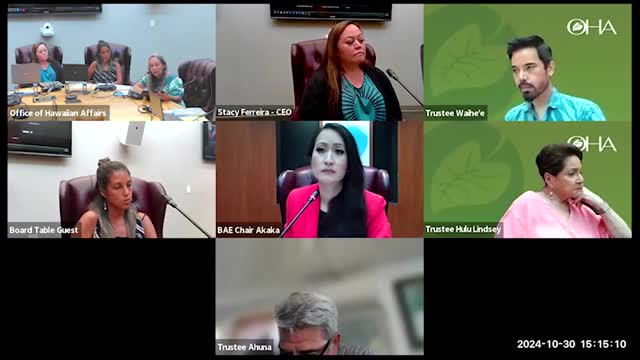
In a recent government meeting, discussions highlighted the historical and ongoing challenges faced by traditional Hawaiian healers and midwives, known as kahunas and midwives, respectively. The conversation traced the roots of cultural repression back to the late 19th century, when U.S. settlers began to label traditional healing practices as dangerous, leading to a systematic effort to discredit and criminalize these practices.
The transcript revealed that in 1865, pressures mounted within the kingdom legislature to eliminate cultural practices, with kahunas facing increasing persecution. Although a law passed in 1868 recognized these healers, it was largely ineffective, as no kahunas were licensed during that period. By the 1890s, anti-kahuna sentiment intensified, culminating in the jailing of practitioners following the events of 1893.
The situation for midwives was similarly dire. From 1910 to 1920, obstetricians campaigned against traditional birthing practices, leading to the first licensing law for midwives in 1921. However, this law disproportionately affected Kanaka practitioners, as not a single licensed midwife was of Hawaiian descent. The repression continued until 1989, when a law inadvertently legalized traditional practices again after a licensing requirement sunsetted.
The meeting underscored a resurgence of traditional practices from 1998 to 2019, with a new generation of trained midwives serving their communities. Participants emphasized the importance of these practices for the safety and well-being of Hawaiian families, noting that data shows no correlation between negative outcomes and home births or traditional methods. Instead, they pointed to the adverse effects of repression on health outcomes, advocating for the recognition and support of traditional healing and birthing practices in Hawaii.
The transcript revealed that in 1865, pressures mounted within the kingdom legislature to eliminate cultural practices, with kahunas facing increasing persecution. Although a law passed in 1868 recognized these healers, it was largely ineffective, as no kahunas were licensed during that period. By the 1890s, anti-kahuna sentiment intensified, culminating in the jailing of practitioners following the events of 1893.
The situation for midwives was similarly dire. From 1910 to 1920, obstetricians campaigned against traditional birthing practices, leading to the first licensing law for midwives in 1921. However, this law disproportionately affected Kanaka practitioners, as not a single licensed midwife was of Hawaiian descent. The repression continued until 1989, when a law inadvertently legalized traditional practices again after a licensing requirement sunsetted.
The meeting underscored a resurgence of traditional practices from 1998 to 2019, with a new generation of trained midwives serving their communities. Participants emphasized the importance of these practices for the safety and well-being of Hawaiian families, noting that data shows no correlation between negative outcomes and home births or traditional methods. Instead, they pointed to the adverse effects of repression on health outcomes, advocating for the recognition and support of traditional healing and birthing practices in Hawaii.
View the Full Meeting & All Its Details
This article offers just a summary. Unlock complete video, transcripts, and insights as a Founder Member.
✓
Watch full, unedited meeting videos
✓
Search every word spoken in unlimited transcripts
✓
AI summaries & real-time alerts (all government levels)
✓
Permanent access to expanding government content
30-day money-back guarantee
