Taro farmer champions water rights and cultural heritage
October 22, 2024 | Water Resource Management, Commission on, Executive , Hawaii
This article was created by AI summarizing key points discussed. AI makes mistakes, so for full details and context, please refer to the video of the full meeting. Please report any errors so we can fix them. Report an error »
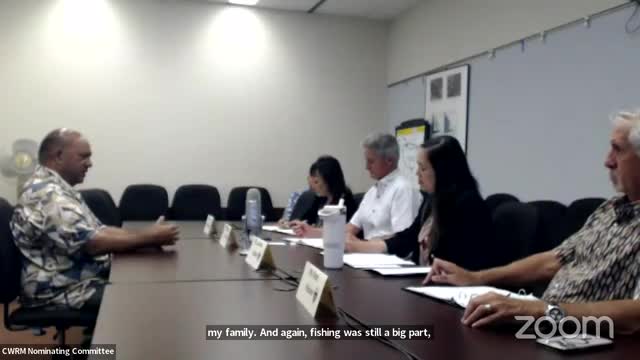
In a recent government meeting, discussions centered around the management of water resources in Hawaii, particularly in relation to traditional taro farming practices. A key speaker, a taro farmer and educator, shared insights into the historical significance of water systems in the region, tracing their origins back to 1400 AD. He emphasized the importance of maintaining clean water for agricultural practices, highlighting a commitment to sustainable farming methods that avoid chemical fertilizers.
The speaker, who has been teaching Hawaiian studies and water management since 2006, detailed his role in managing traditional lo'i (taro fields) in Manoa and Punalu'u, where he oversees a partnership with Kamehameha Schools. He noted that the water management system he oversees is not only vital for agriculture but also serves as an educational tool for students of all ages, from preschoolers to seniors.
During the meeting, the speaker addressed the responsibilities of the water commission, emphasizing the need to uphold native Hawaiian rights and ensure equitable access to water resources. He articulated that the commission must consider various laws and the unique needs of different communities when making decisions about water allocation.
Looking ahead, he identified the biggest challenges facing the commission as the need for greater public awareness and engagement in water resource management. He proposed that initiatives like the Mala Mahaloa kalo festival, which celebrates the diversity of taro, could play a crucial role in raising awareness about the importance of water and its connection to cultural practices.
Overall, the meeting underscored the critical intersection of water management, cultural heritage, and community involvement in shaping the future of Hawaii's water resources.
The speaker, who has been teaching Hawaiian studies and water management since 2006, detailed his role in managing traditional lo'i (taro fields) in Manoa and Punalu'u, where he oversees a partnership with Kamehameha Schools. He noted that the water management system he oversees is not only vital for agriculture but also serves as an educational tool for students of all ages, from preschoolers to seniors.
During the meeting, the speaker addressed the responsibilities of the water commission, emphasizing the need to uphold native Hawaiian rights and ensure equitable access to water resources. He articulated that the commission must consider various laws and the unique needs of different communities when making decisions about water allocation.
Looking ahead, he identified the biggest challenges facing the commission as the need for greater public awareness and engagement in water resource management. He proposed that initiatives like the Mala Mahaloa kalo festival, which celebrates the diversity of taro, could play a crucial role in raising awareness about the importance of water and its connection to cultural practices.
Overall, the meeting underscored the critical intersection of water management, cultural heritage, and community involvement in shaping the future of Hawaii's water resources.
View the Full Meeting & All Its Details
This article offers just a summary. Unlock complete video, transcripts, and insights as a Founder Member.
✓
Watch full, unedited meeting videos
✓
Search every word spoken in unlimited transcripts
✓
AI summaries & real-time alerts (all government levels)
✓
Permanent access to expanding government content
30-day money-back guarantee
