City accelerates lead service line replacements to protect residents
November 14, 2024 | Syracuse City, Onondaga County, New York
This article was created by AI summarizing key points discussed. AI makes mistakes, so for full details and context, please refer to the video of the full meeting. Please report any errors so we can fix them. Report an error »
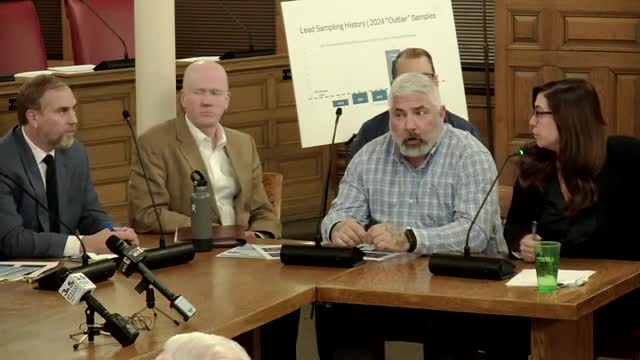
In a recent government meeting, officials discussed the ongoing efforts to address lead service line replacements across the city, emphasizing a significant increase in replacement initiatives. The city plans to replace over 3,000 lead service lines next year, supported by more than $22 million in state funding. This initiative is part of a broader strategy to eliminate lead service lines within five years, which is half the time mandated by the Environmental Protection Agency (EPA).
Officials noted that testing results from the first half of 2024 showed unusually high lead levels, prompting an investigation into potential sampling errors. Subsequent tests indicated lead levels below one part per billion, aligning with historical data. The city is committed to continuing testing and replacement efforts, particularly in areas with older homes that are more susceptible to lead contamination.
The discussion also highlighted the importance of equity in planning these projects. The city will utilize an equity score based on various socioeconomic factors to prioritize service line replacements, ensuring that the most vulnerable communities receive attention first.
Concerns were raised about low water pressure in certain neighborhoods and its potential link to lead contamination, although officials clarified that water composition remains unchanged despite pressure fluctuations.
In terms of funding, city officials are actively pursuing additional financial support from state and federal partners, having recently secured $12.8 million from the bipartisan infrastructure law. They aim to maintain a steady pace of replacements, with expectations of continued funding to support these efforts.
The meeting concluded with discussions about the possibility of declaring a state of emergency to unlock further funding. However, officials expressed that current data does not support such a declaration, emphasizing their commitment to securing available resources through existing channels.
Officials noted that testing results from the first half of 2024 showed unusually high lead levels, prompting an investigation into potential sampling errors. Subsequent tests indicated lead levels below one part per billion, aligning with historical data. The city is committed to continuing testing and replacement efforts, particularly in areas with older homes that are more susceptible to lead contamination.
The discussion also highlighted the importance of equity in planning these projects. The city will utilize an equity score based on various socioeconomic factors to prioritize service line replacements, ensuring that the most vulnerable communities receive attention first.
Concerns were raised about low water pressure in certain neighborhoods and its potential link to lead contamination, although officials clarified that water composition remains unchanged despite pressure fluctuations.
In terms of funding, city officials are actively pursuing additional financial support from state and federal partners, having recently secured $12.8 million from the bipartisan infrastructure law. They aim to maintain a steady pace of replacements, with expectations of continued funding to support these efforts.
The meeting concluded with discussions about the possibility of declaring a state of emergency to unlock further funding. However, officials expressed that current data does not support such a declaration, emphasizing their commitment to securing available resources through existing channels.
Don't Miss a Word: See the Full Meeting!
Go beyond summaries. Unlock every video, transcript, and key insight with a Founder Membership.
✓
Get instant access to full meeting videos
✓
Search and clip any phrase from complete transcripts
✓
Receive AI-powered summaries & custom alerts
✓
Enjoy lifetime, unrestricted access to government data
30-day money-back guarantee
