Massachusetts tackles housing crisis with new funding solutions
November 20, 2024 | Town of Middleborough, Plymouth County, Massachusetts
This article was created by AI summarizing key points discussed. AI makes mistakes, so for full details and context, please refer to the video of the full meeting. Please report any errors so we can fix them. Report an error »
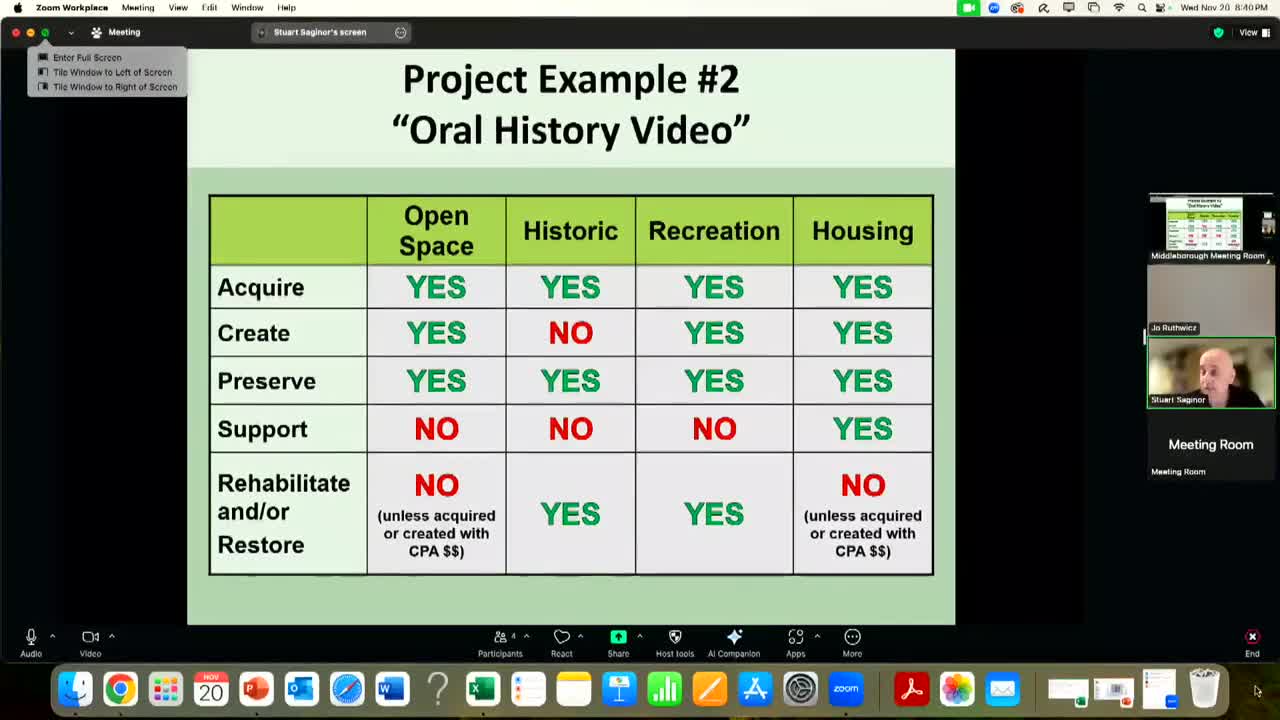
In a recent government meeting, officials discussed the complexities surrounding the Community Preservation Act (CPA) and its implications for funding various projects, particularly in the areas of rehabilitation, historic preservation, and affordable housing. The conversation highlighted the distinct categories within the CPA, emphasizing that while rehabilitation of parks and recreational facilities is permissible, conservation land can only be rehabilitated if it was acquired with CPA funds.
A historical context was provided regarding the CPA's inception, particularly the influence of Barbara Anderson, a prominent anti-tax advocate. Her efforts in the late 1980s led to the establishment of Proposition 2A, which limited municipal budget increases. This backdrop created a contentious environment when the CPA was proposed, as it introduced a surcharge that could potentially conflict with existing tax limitations. To navigate this, the legislature initially restricted rehabilitation funding for historic assets unless they were acquired with CPA funds, a decision that later proved problematic.
The meeting also addressed the ongoing challenges within the housing authority category of the CPA. While preservation efforts are allowed, rehabilitation of existing housing units remains prohibited. This distinction has led to confusion and debate among officials, particularly regarding what constitutes preservation versus rehabilitation. The Department of Housing and Livable Communities (DHCD) has attempted to clarify this by suggesting that certain protective measures could qualify for funding, although this interpretation is contested by the Department of Revenue.
The discussion underscored the pressing need for affordable housing in Massachusetts, with a reported backlog of $7 billion in repairs needed for state-owned housing authority properties. The recent passage of the Affordable Homes Act, which allocates $2 billion for addressing these issues, was noted as a significant step forward. However, officials expressed skepticism about the legislature's willingness to expand CPA funding for rehabilitation of housing authority units, citing concerns that it could detract from new housing production efforts.
Overall, the meeting revealed a complex interplay of historical context, legislative intent, and current housing needs, highlighting the ongoing challenges faced by communities in navigating the CPA's regulations while addressing pressing housing shortages.
A historical context was provided regarding the CPA's inception, particularly the influence of Barbara Anderson, a prominent anti-tax advocate. Her efforts in the late 1980s led to the establishment of Proposition 2A, which limited municipal budget increases. This backdrop created a contentious environment when the CPA was proposed, as it introduced a surcharge that could potentially conflict with existing tax limitations. To navigate this, the legislature initially restricted rehabilitation funding for historic assets unless they were acquired with CPA funds, a decision that later proved problematic.
The meeting also addressed the ongoing challenges within the housing authority category of the CPA. While preservation efforts are allowed, rehabilitation of existing housing units remains prohibited. This distinction has led to confusion and debate among officials, particularly regarding what constitutes preservation versus rehabilitation. The Department of Housing and Livable Communities (DHCD) has attempted to clarify this by suggesting that certain protective measures could qualify for funding, although this interpretation is contested by the Department of Revenue.
The discussion underscored the pressing need for affordable housing in Massachusetts, with a reported backlog of $7 billion in repairs needed for state-owned housing authority properties. The recent passage of the Affordable Homes Act, which allocates $2 billion for addressing these issues, was noted as a significant step forward. However, officials expressed skepticism about the legislature's willingness to expand CPA funding for rehabilitation of housing authority units, citing concerns that it could detract from new housing production efforts.
Overall, the meeting revealed a complex interplay of historical context, legislative intent, and current housing needs, highlighting the ongoing challenges faced by communities in navigating the CPA's regulations while addressing pressing housing shortages.
Don't Miss a Word: See the Full Meeting!
Go beyond summaries. Unlock every video, transcript, and key insight with a Founder Membership.
✓
Get instant access to full meeting videos
✓
Search and clip any phrase from complete transcripts
✓
Receive AI-powered summaries & custom alerts
✓
Enjoy lifetime, unrestricted access to government data
30-day money-back guarantee
