Texas faces backlash over census counting and gerrymandering issues
December 05, 2024 | Oversight and Reform: House Committee, Standing Committees - House & Senate, Congressional Hearings Compilation, Legislative, Federal
This article was created by AI summarizing key points discussed. AI makes mistakes, so for full details and context, please refer to the video of the full meeting. Please report any errors so we can fix them. Report an error »
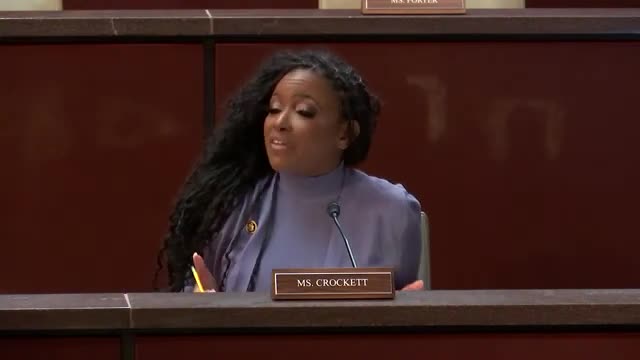
During a recent government meeting, discussions centered on the implications of the U.S. Census and its impact on representation in Texas. A commissioner highlighted the state's initiative to provide land for camps aimed at detaining individuals, raising concerns about how this could deter people from participating in the census. The fear of deportation may lead many to avoid filling out census forms, which could skew population counts.
Research presented during the meeting indicated that the federal government's actions could lead to selective inclusion of individuals in households. This is particularly concerning as the census counts not only voters but also children and non-voters. In Texas, the 2020 census revealed a significant undercount, especially among minority populations. Despite adding 4 million people, only 180,000 were identified as Anglo, suggesting that the majority of new residents were people of color. However, Texas gained two new congressional seats, both of which were allocated to white Republican representatives, raising questions about fair representation.
The meeting also addressed the issue of prison gerrymandering, where inmates are counted in the districts where they are incarcerated rather than their home communities. This practice disproportionately benefits rural areas, which may receive more resources despite losing population. The discussion highlighted the broader issue of racial disparities in incarceration rates, with Texas having one of the highest rates in the country.
Participants emphasized the importance of counting all residents, regardless of citizenship status, to ensure fair representation and resource allocation. The meeting concluded with a commitment to improve methods for counting historically underrepresented populations in future censuses.
Research presented during the meeting indicated that the federal government's actions could lead to selective inclusion of individuals in households. This is particularly concerning as the census counts not only voters but also children and non-voters. In Texas, the 2020 census revealed a significant undercount, especially among minority populations. Despite adding 4 million people, only 180,000 were identified as Anglo, suggesting that the majority of new residents were people of color. However, Texas gained two new congressional seats, both of which were allocated to white Republican representatives, raising questions about fair representation.
The meeting also addressed the issue of prison gerrymandering, where inmates are counted in the districts where they are incarcerated rather than their home communities. This practice disproportionately benefits rural areas, which may receive more resources despite losing population. The discussion highlighted the broader issue of racial disparities in incarceration rates, with Texas having one of the highest rates in the country.
Participants emphasized the importance of counting all residents, regardless of citizenship status, to ensure fair representation and resource allocation. The meeting concluded with a commitment to improve methods for counting historically underrepresented populations in future censuses.
Don't Miss a Word: See the Full Meeting!
Go beyond summaries. Unlock every video, transcript, and key insight with a Founder Membership.
✓
Get instant access to full meeting videos
✓
Search and clip any phrase from complete transcripts
✓
Receive AI-powered summaries & custom alerts
✓
Enjoy lifetime, unrestricted access to government data
30-day money-back guarantee
